-
Welcome to Simtropolis!
A community dedicated to SimCity 4 and all city-building games. (About Simtropolis)
-
Announcement
-

Simtropolis Returns! 05/26/2026
See here for details about our site recovery efforts.
-
 Supported
City Journals
Our community City Journals
-
 Latest Entry
00 - Introduction and Fresh Start
So here is an idea what just come into my mind few days ago. with the time being, I feel like SimCity 4 almost feels like to be turned into a sandbox games (mostly done by my experience of playing this game from 2008). Although I still use the "city grows" and such thing in SimCity 4, but its feel different with how I played SimCity 4 back in 2008-2009 days which is to grow the city from zero and pretty much use all of its functions. This Journal which I just start is mutually independent from my other CJs (I still do my other CJ anyway). It will basically show the progress of a city grow from zero with how it might be intended to be by the original Game, I still uses mods as usual (East Asian Plugins) but I will limit myself if possible not to use any cheat or any related trick (such as using mods). I might also uses some eye candy stuffs (such as slopewall etc) but try not to use any plopable commercial or residential). Also please note that in future post (and this post) I'll post some raw ingame image (might also include the user interface) so forgive me if somebody don't like it. Anyway here is the setting for this CJ, I reused the map from my 2009 stuff, Starfishland which I renamed it into something much better. Anyway here is the location where I would like to start: I'll start the city and named it "Wakaba" (means "Young Leaves" in Japanese, suggesting a symbol of a new start). As a start in SimCity 4, I'll just make a several grid block of residential, commercial and industrial as well as the powerplant next to industrial The community has turned into a small town Economy looks fine for the start (I plan the trees in god mode since I forgot to do it at start lol) Anyway that might be for the start, let me know how you think about it if I should continue this or no.. Thanks for reading...- Read More
- 0 Comments
-
 Latest Entry
Hope - Year 3
The story of Hope had spread throughout the region, and what had started out as a settlement of outcasts was now attracting not only those with no where to go, but also well-to-do families that valued the freedom Hope afforded them. On the corner of Walter and Maple Streets, relatively nice homes were constructed by some of the wealthier families that had moved into the town. These families contributed significantly to the economy of Hope, helping to further the development of the farms around the town – one family in particular, the Terring family, acquired a large number of cattle that they had graze behind their home, and the selling of the milk and meat became their primary business. The Hope Council was formed to run the affairs of the town, and would convene every Friday at the Lord’s House Church on Walter Street. The church was the meeting spot of the town, and the Friday meetings were attended by all. With the population of the town growing beyond 200 people, it had become important for the residents to have some kind of leadership to help guide the growth and prosperity of Hope. While the cattle were owned by Terring, the farms were all the property of the town, and the income provided from the crops were distributed equally amongst all the families. Of course, that did not mean some of the families did not start operating side businesses – the Brook family, for example, now had a couple of trailers in their logistics company to help transport goods not only to and from Hope, but also other settlements in the area. The Glass family began working as the primary contractors in Hope, building everything from walls to houses, while the Hodom family opened up a design and décor office and helped fabricate furniture for the town’s residents. The Hope Council was eager to see the development of the town, and the first project they unanimously voted for was the upgrading of Walter Street – they wanted to turn the muddy dirt road into a cobblestone street that connected all the way to the primary road on the outskirts of town. They had enough EDs saved up to make the project happen relatively quickly, and once they were down with Walter Street, the paving of Maple Street would begin.- Read More
- 0 Comments
-
- 7
Entries - 0
Comments - 502
Views
Recent Entries
.thumb.jpg.508247c79dff97253a264156d321ae39.jpg) Latest Entry
Latest Entry
St. Wilhelm: Part 3 (Wait, there is a third Island?)
This entry would cover the last and final Island of the trio that makes up the Principality of St. Wilhelm. Welcome to St. Henrick: Settled around 200 years after the founding of the principality, the island was named after Prince (and later Saint) Henrick, who reclaimed the throne after his traitorous uncle usurped it. To fend off enemy forces from the sea, he built a massive fortress in the center of the island as the headquarters for his troops. There it remained in use as a fortress and later as a monastery until the 13th century, when the Prince's Fortress was built on the main island. In the remaining centuries, the castle grounds remained the property of the Princely family, which uses it as their hunting retreat while a town was founded on the former ramparts of the fortress. Visitors can still enjoy the centuries-old village green in downtown St. Henrick, now featuring a modernist sculpture from a popular local artist. Being the small principality surrounded by water, one of the major problems facing St. Wilhelm's government is the lack of build-able land. With a burgeoning population and massive influx of new citizens seeking fresh opportunities, St. Wilhelm must seek the most value out of every scrap of solid ground without overbuilding and sacrificing the standard of living of its citizens. With the consent of Princess Charlotte as one of her first acts on the throne, the old Fortress and Royal hunting grounds were converted to residential use. The ruins of the keep and the castle towers were retained, and roads were built around them to create a pleasant suburban environment. High-rises were built along the repaved access road to the fortress, and the old Rampart Road was widened to create a causeway around it. The view from a drone shows the engineers' effort to preserve history while maximizing land utilization by building roundabouts around each of the ten ruined towers. The ancient town of St. Henrick is located in the upper right hand corner. The ruins of the keep lies in the middle, a memorial to history surrounded by upscale, modern homes. Citizens are connected to the other two islands through the Ft. Henrick Parkway, one of the newest legs of the Slingshot project described in the last entry. Here is the terminus on the Island connected from Nordinsel. Of course, there is also a ferry service to the other islands to serve commuters and tourists. The ruins of the coal power plant and former ammunition factory, built during the last World War, lies on the coast. It served as the main source of power to the island until wind and wave power became the sole (and green) sources of energy. In addition to the re-purposing of the old Fortress and Hunting Grounds, the government also created one of the most scenic green spaces in all of Nordreich: the St. Henrick Imperial Park and Nature Reserve, located in what was the Royal forest on the Eastern part of the Island, just beyond the hamlet of Bachdorf. It is a massively popular attraction, and citizens across Nordreich and beyond came to visit the expansive park, featuring nature trails, camping areas and other recreational amenities. At night, campfires lit up the night sky. On the other side of St. Henrick Park sits the Summer Palace, a working residence for the Princely family. Built in the 1800s over the ruins of the royal hunting lodge. A covered botanical gardens was added in the 1900s. Today the palace grounds offer breathtaking views of the other islands, and is open to the public when the Princess and her family are not in residence. Next: Living, Working, and Playing.- Read More
- 0 Comments
- 7
-
- 29
Entries - 301
Comments - 11793
Views
Recent Entries
 Latest Entry
Arquennes - Old City (2)
Hello everyone! Today, we're going to continue our tour of Arquennes' old city Let's go! 24. ARQUENNES - OLD CITY (2) 1. We begin directly with the city's most famous landmarks, St. Etienne Cathedral and the episcopal palace. They were the symbols during centuries of the city's ecclesiastical power. Now, they attract many tourists. The cathedral's tower can be seen from many kilometers around. 2. On the right, the simply named Arquennes Museum, it was built in 1923 to show the many pieces of art that the Episcopal Principality had gathered during centuries. Not far from it, people love wandering next to Cardinal Ladeuze fountain. 3. The city is not flat of course! On the Right, St. Jacques' Gate, from the city's first wall. 4. People really appreciate pedestrian areas! 5. The last picture features several things that I've tried to implement in this city: More roundabouts to make it as much European as possible More curves to give the city a more natural look More green areas. FrankU's parks are awesome for that purpose! I can't stop using them. More empty walls. Cities IRL aren't perfect, so I don't think I should cover every walls, especially when the BAT maker added awesome textures on it! 6. 7. Rue du Rempart ('Wall street'), a pedestrian street with many restaurants. 8. The train station. As you can see, the building is a bit outdated. Fortunately, its renovation was decided by the national train company. 9. 10. 11. The Old Market, an institution in Arquennes, and the Memorial 39-45. 12. 13. 14. One small mosaic. 15. 3 Bigger views 16. 17. I hope you liked it! See you soon - REPLIES - @_Michael Thanks a lot my friend! @kschmidt Thank you too! @The British Sausage Your enthusiastic comment: 10/10. Thank you! @SC4L0ver Thank you too! @younghappy Thank you! That was my objective, great to see it worked! @Scirius: I can't tag you, that's incredible... I've been using some of your houses for a while now, they really fit everywhere! Thanks a lot for the comment! @Urban Constanta Thank you very much! @TekindusT Thanks a lot! @nRVOUS It's my own personalised sidewalk. I didn't release it officially, but you can find it here: https://www.dropbox.com/s/ff9ua5vic3sws6h/textures perso.dat?dl=0 - 29
-
- 77
Entries - 899
Comments - 114470
Views
Recent Entries
 Latest Entry
AND - Eos System | "New Frontier"
_____________________________________________________________________ Note: Well lol, hello. Randomly decided to make something quick again. It's a shame I haven't been able to make anything more ambitious, but I thought this would be a nice intro to the other side of the Mass Effect Universe. _____________________________________________________________________ _________________________________________________________________ - 77
-
- 5
Entries - 0
Comments - 498
Views
Recent Entries
 Latest Entry
Update 4: Bankside Parcel
Update 4: While waiting for my experiment to complete, I moved onto other areas of the city. The Bankside Parcel: A highrise, intermixed Residential and Commercial area, it's the perfect transition from uptown to the new Downtown. Some spaces have been left open for new parks or buildings. Just east of it: Same thing as the last parcel, except the commercial buildings are placed closer to the residential buildings. Just north: A more apartment-like community. It's upper class, and I'll work on more detailed decoration at a later time. For now, dense trees work just fine for me. As a native Sacramentan, the urban canopy is a must. The whole thing: With my next update, I'll start moving into the downtown area.- Read More
- 0 Comments
- 5
-
- 8
Entries - 4
Comments - 485
Views
Recent Entries
- 8
-
- 49
Entries - 279
Comments - 26185
Views
Recent Entries
 Latest Entry
Entry 46 - Downtown Tour (5E140)
Hiya there! I know I don't have the time to post updates anymore, but I've done more stuff with Dragon's Landing. So here goes! Here's a map of Perwyn Island and the state as a whole, first! We're in Dragon's Landing, but we've already visited a few other towns here : Wodenbury, PI back when CSL first released, as well as Westport, PI in the north of Perwyn Island. We've also been to Ashford, NT! But let's focus on the state capital of Dragon's Landing, which also happens to be the southernmost town of Perwyn Island.
Dragon's Landing is a fairly old city, and its streets are twisted and narrow. Downtown Landing sits on its own island, which was mostly made out of landfill over the years. The insular peculiarities of Downtown Landing (an island surrounded by a bigger island, itself connected to mainland Perwyn), there only are a few bottlenecks for traffic to enter or leave; Station Road acts as a major road and connects to the pan-Perwyn Island motorway, but is constantly clogged up. At the edge of the city centre, on Landing Island itself, Dragon's Landing train station acts as the southern terminus of the Perwyn Line. It is not connected to the rest of Cathnoquey's rail network. The Landing tram-train and bus terminals are also located here. The eight-bay terminal handles intercity bus traffic as well as local buses. That is because the Perwyn Island line only stops at a few major towns; most stops were closed years ago, in an age when railways struggled against the automobile. The railway station is also where the A9 road that links most of Perwyn Island ends and links to different parts of the city. A plan to overhaul the intersection and make it pedestrian-friendly wad drawn up, but then shelved for many years. Let's head downtown now - to the city's main hub, Haymarket Place. Historically built around Castle Road (which goes from left to right here), the Haymarket used to be where farmers would sell their produce and tolls into the city would be collected, right at the foot of the Arch of Triumph and the Guildhall (now behind the Lighthouse). Nowadays a major crossroad junction, the Haymarket retains its commercial role with the opening of the Haymarket shopping centre some years ago after a decade of neglect and botched redevelopment. The Landing is full of historic buildings - such as the Perwyn State Capitol, where the state congress sits, right beside the Perwyn Faculty of Law and Finance. There are also newer buildings defining the skyline, such as Telecom Tower. Laws regarding the preservation of historic sites and heritage are fairly lax in Perwyn. The Alienware Tower, as well as some of the city's other taller buildings, is one of the city's major attractions. Of note, one can see the Harbourmaster's Office (the red brick building in the foreground), as well as the Ferry Terminal - where one can board ferries to the mainland via New Wigmore or Wodenbury. In the background, one can spot the social housing estate of New Taverley, where no less than 15'000 people live. View over the Landing, looking eastwards. Close up of the Haymarket and Jackson Road, including the busy bus interchange and taxi station. Overview of the ruined Dragon Castle, one of the fortresses of the first wave of Dunmeri settlers from Morrowind. Perwyn Island and Cathnoquey in general have a history that spans much longer than people realise, and at such this castle dates back from the Tamriel invasion of Akavir, when it was built and used as a forward staging ground. Even longer ago, the Akaviri were the ones to invade Tamriel, and they brought their architecture with them. Though the Akaviri withdraw completely from Cathnoquey eons ago, leaving it unhabited, Perwyn Island was their final port of harbour before their invasion proper. This makes Perwyn a holy ground of the Akaviri faith, based on ancestor worship and harmony with the land, and at such Akaviri shrines, not unlike temples of the Blades found elsewhere on Tamriel, were erected and act as touristic hotspots. This is Perwyn Shrine, one of two major such hotspots. And here is Cathnoquey's Grand Shrine, the authority for all such shrines in all of Cathnoquey. Interestingly, Dragon's Landing caters especially to the Akaviri faith; that stands in contrast to Westport (which we've already visited in this CJ), which acts as a beacon for the Dunmeri faiths. This is revealing of a north/south clash that, for better or worse, defines Perwyn islanders. Going further in town, one can spot some of the canals that one criss-crossed the island. Most have been filled up, but this one still remains. All in all, Dragon's Landing strives to be a modern town, with what little money it can spare. Looking south towards the ferry terminal. Traffic in Dragon's Landing is fairly poor at most hours of the day, and it does not help that the Tram really only connects outlying areas with Dragon's Landing proper. Let's take a drive further out! The outside of Dragon's Landing is filled with terraced houses, fairly common and distinctive of the North Territories and of Perwyn Island proper. They make sense, too - the red bricks are made from locally sourced clay, and the island's small size demands houses adjust accordingly, in contrast with the wildly untamed expanse of Cathnoquey as a whole. Dragon's Landing also features several residential high rises. These towers are actually fairly expensive to live in - but they're properly maintained, have security, and some even have indoor pools. The Landing's very own multisport stadium and concert arena even has its own tram stop. It's the biggest stadium in the entire state of Perwyn Island. The outskirts of the city are also dotted with business parks, such as the one at Gnisis Parkway, right by the airport. Here is the high street in Wortown, some 6 miles away from Dragon's Landing proper. Wortown has some lovely beaches, looking over the bay locally known as the Fen. It also has its own train station, served by tram-trains looping around Landing island. Let's check out a couple of pictures last, such as this shopping centre on the western edge of the city, right by the roundabout leading to the industrial harbour. And here is the very peaceful village of Watling, about 8 miles away from Dragon's Landing. And finally, a general overview of Landing Island itself, looking north! One can see Harbour Island as well as downtown Landing on the bottom of the picture, with the city sprawling to the east (Balmont and Elsfield) and the west (Taverley and its housing towers). In the middle, the Dragon's Roost sits imposingly, as a former volcano that has been inactive for at least 2000 years. That's it for now! I have more pictures of the road and rail network, as well as detailed closeups of the waterfront, but I'll keep those for a later date. This is probably not the best I've done in a while, but alas I have very little time left for Cities Skylines, I'm just not willing to let this project die. So I hope you enjoyed reading regardless =)- Read More
- 0 Comments
- 49
-
 Latest Entry
1. Overview
I'm back. I have a little bit more time; not much, but a little. Posts will be seldom at best, but the fact that I'm back still has me baffled.
I promised I would bring a new region in to light - that region was partly damaged due to file transfer, so only a handful of cities had survived as a result. But fortunately, I was able to develop a small "provincial" region with over 1,200,000 residents. Allow me to walk you through some miscellaneous pictures.
1) Above is the smaller town of Lindley, with a population of 6,551. It straddles a northern development corridor, a distance from the largest city in Columbia, Northampton. The road to the right, Route 74, climbs the ridge and serves as a pivotal link between Lindley and points west on the Hashen Plateau, including Mountainville.
2) The Hashen Bridge was constructed in 1978, while the majority of Columbia province was much smaller than it was today. Originally a main link across the region (with Lindley at the time being an important transportation town), it has since been overshadowed by numerous freeways and other regional routes; the bridge today carries local traffic between Lindley and rural areas outside of Northampton.
3) Further down the valley from Lindley is the moderately sized community of Midland, which has a population of 22,642. Midland saw quite considerable gentrification and expansion in the late 1990s with the construction of Highway 21 to the immediate west. Midland has, as of recent, become more of a commuter city, as the population has steadily increased with the surrounding Auburn and Northampton suburbs approaching city boundaries.
4) Appropriately named "The Crossroads", this area is the result of an 11 year expansion project, aimed at joining city of Cambridge and the metropolis Northampton. Here, Highway 21 continues towards the top of the image, and the newly reassigned Highway 72 continues into a lengthy tunnel, where it emerges at the foot of the Hashen River. The area here is officially designated as part of Cambridge, and the development around this new interchange has exploded. The reassignment of Highway 72 gives suburban areas a much faster, direct route into the Northampton area, whereas before commuters were required to encounter Auburn traffic and encounter the previous terminus of Highway 72 north of Midland.
https://i.imgur.com/U424g3l.jpg[/img ]5) Here we see Highway 72 meandering to the right of the screen in the city of Riverton, right next door to the thriving metropolis of Northampton. Riverton sits on the northern shore of Hashen Bay, with ferry and subway services providing easy access to Northampton without use of car. Towards the top of the picture is Route 37, which is a major surface artery for the smaller cities around Northampton. Not pictured to the bottom is Lancaster Island, which serves as a convenient turn west for the Highway 72 towards Cambridge; a small industrial park is also found here.
And, last but certainly not least....
^^^^^ (unfortunately, this region is solely medium tiles, so I can't go too far without exposing edges. But since this was at night and it wasn't too terrible, I found it hard to pass up.)
(pro tip 2: demolish those darn manufacturing tiles so they don't show zots and ruin another picture.)
6) All of the above are of Northampton, a city currently straddling a population of 775,000 and a greater urban area of 908,000. Northampton is comprised of one large peninsula, as well as two islands to the south and east.
But more on that later....this was just an intro.
It's good to be back. Not sure when the next one will be, but I look forward to continuing this CJ. Until next time. -
 Latest Entry
"BIG update"
photo from http://przemyslawbudziak.pl/
Hi all!
In this update I'll introduce a lot of my hard work.
I've made a part of oldtown.
There is a new construction site nearby.
The oldtown is a perfect place for a cup of tea and a piece o cake!
This moment was critiacl for my game. I've dowloaded some new cool mods and the whole steam workshop stucked. I've spent few hours to figure what was wrong.
Only the workers crew was happy. The had a small break.
Next day I had a vision. A vision with a part of main city route and a part of river waterside.
From skyview everything look now better.
A port fire station with a training station.
River police station
Some warehouses and industry areas.
A small church and a gas station.
Some office buildings.
A chocolate factory and an office building in the background.
Thats it for now. A new update soon. -
- 4
Entries - 6
Comments - 680
Views
Recent Entries
 Latest Entry
Pulaski County - Atkinsville
NEW SCOTLAND - ATKINSVILLE - 004 In New Scotland's western, mountainous region lies Pulaski County. Named for the legendary Polish-American Revolutionary War general Casimir Pulaski, the county is home to some of the most beautiful vistas in all of the state. The surrounding Bundok Mountains define the region, and provide a scenic backdrop for its cities. Although smaller than neighboring New Basel, Pulaski County's seat, Atkinsville, is small, lovely town in the Bundoks. Historic Queen Street dominates Atkinsville's small downtown. Immediately south of where this picture was taken is the Vahlbusch Municipal Park, named for the first president of the private college (now a public state university) that made Atkinsville the town that it is today. Nearby Bowie Street (named for the legendary wilderness extraordinaire by the same name) features more of Atkinsville's historic downtown. Shops in this picture include the First Mate's Bookshelf (far right), a bookstore that was first established in 1910. To its left is the Black Sheep Cafe, a coffeehouse that has served Atkinsville residents since its founding by a World War II veteran in the late 1940s. At the corner of Bowie and Queen streets is the Jackson Hotel and General Store, named in honor of President Andrew Jackson, who allegedly stayed at the hotel sometime during his presidency. Just north of downtown is the densely packed, but quaint, Umstead neighborhood. The area's residents are mostly middle-class, but many blue-collar workers call the neighborhood home. Most of the houses here were build at the turn of the century. Being just south of the banks of the Metis River gives Umstead's residents speactacular views of not only the river, but also the mountains that lay right across it. Immediately south of downtown is the Glenwood neighborhood. This area is home to many of Atkinsville's factory workers; due to its cheap rent, however, many students at nearby Jefferson State University call the area home. In the next entry, we will showcase Jefferson State University, and the beautiful countryside surrounding Atkinsville. - 4
-
 Latest Entry
Part 2 - Megacity Ahead
PART 2 - Megacity Ahead Sorry for the fast pace... Maybe because I redo the city again since it doesn't grow. So far, so good hahahahah! Suggestions/comments? I'm so glad to hear it from you!! ~CalvinB -
- 13
Entries - 69
Comments - 4417
Views
Recent Entries
- 13
-
-
- 3
Entries - 12
Comments - 465
Views
Recent Entries
 Latest Entry
1933-1934 - Wheels of Progress
January 30th, 1933 "Those pesky townspeople! They just want too much in too little time!"
Greg Bresky wasn't too thrilled about the latest town expansions. Day by day, he sees his estate shrink. One year ago, he could look all the way to the Pedigo river from his house, but now, his view is blocked by all the new houses they've built in the past year. His view, ruined forever by the wheels of progress. Did he left his motherland Poland for this all these years ago? No. All he wanted was some peace and quiet, far away from the war that had ruined his homeland. Out here, he thought he had all space to do his own business, to start a farm and live a quiet life. Unfortunately, it was never meant to be. "Greg, what's wrong?", a female voice said. It was his wife, Francis. Unlike Greg, she came from around here. They found each other years ago in the local bar. She helped him to settle in across the other side of the Atlantic and they have now been married for ten years. "This new railway station will bring nothing but trouble to this town," Greg said. "It's a gateway for lazy scum and corrupt capitalists to come here and destroy our town." "I think you're exaggerating, honey." "Am I? Look around. It has already begun! We are slowly being surrounded by strangers. And it will be especially bad when Tree-ET comes to town." "Tree-ET? Sorry, I don't follow..." "Never heard of Tree-ET? They are the big company that's going to come here and cut down our lovely forest! They destroy our landscape just to line their pockets!" "Frankly, my dear, I think there are quite some people welcoming them in town. It has been hard for people to find a job here. For some, Tree-ET can feel like a blessing from above." "I don't stand by doing nothing! I'll stand my ground and fight to the very end to protect our forests here!" Francis sighed. She was witnessing one of her husband's tantrums again. Fortunately, it was not against her. But still, these conversations were something she wanted to get over with as soon as possible. "Well honey, are you done now? The curly kale stew is ready to be served." "Ah, splendid, dear! At least there are some things that never change, for the better." The two of them took a seat at the dinner table and enjoyed Francis' stew. Dinner was the best way to calm Greg down. For now...
_______________________________
It has been a while, but I finally got around making a second update of Telegraph Road. In the previous post, the city has started expanding and we planned out a few things. Now I'm still trying to find my ground in the Natural Growth method, but I found that construction time in Cities:Skylines goes way too fast. Now I played this update for one in-game year, but it feels like two years or even more has passed. So as of now, 1 in-game year equals 2 story-years. I probably have to slow down, playing sessions of 6 in-game months at the time. So, here's what happened in Nordale in 1933 and 1934. First, we'll take a look in the old town center. Yup, things are still going swell...
Now, one of the plans of last update was to build some extra capacity for electricity; this has now been completed with a second gas unit
But the biggest plan has also been realised: building a railway station for the town. As you can see, we have a new (and cute!) railway station. And with all the new people coming in from the trains, a new station neighbourhood arose, hosting businesses and our newest residents.
On the southern side, the town has grown again, but right now, the ressidential demand has leveled. At this point, all three demand groups are low and the town has found an equilibrium.
But there's an opportunity around the corner: we have a lot of natural resources we can gather, and the SimNation has some interest to get some. The easiest resource to get to is lumber, so preparations have been made to set up lumber industry here. We'll see more of it soon!
To conclude this update, let's have an areal shot:
Just some more data: Population: 1250 Budget: Current bank balance: +$5 500 (no loans) Current weekly cashflow: +$400 - +$600 Demand: Ressidential: low Commercial: low Industry: low Water: Precise Demand and supply unknown Supply is way over capacity even with minimal facilities. Electricity: Current Supply: 30 MW Current demand: 22 MW Civil Facilities: 1 primary school 1 small police station 1 small fire station 1 clinic 1 community church 1 railway station That's it for today! See you next time and keep those suggestions coming!
-- Maarten (MandelSoft) - 3
-
- 14
Entries - 28
Comments - 1195
Views
Recent Entries
 Latest Entry
Comeback
Alright so San Guillermo is back from the dead with this new teaser of a new city What to expect: San Guillermo is a fictional city in Southern California.Mainly based off Los Angeles, this project aims to capture the feel of LA while also adding realism in the process.However, not every little detail of LA will be added so here's the included and cut features of the project. Features Cut Urban sprawl Wide highways Beverly Hills Pier(maybe) Beach and waterfront areas Extreme interchanges Hollywood Movie studios Canals High-end shopping areas Suburban areas Traffic(IDK about that)- Read More
- 0 Comments
- 14
-
 Latest Entry
Along metro line B
Today, I'm going to present you my city with an original presentation. You are going discover the city accros the metro station along the line B of Ligonnes. Metro B map Gerland quarter, his sport hall and his old stadium which is now use for rugby The quarter is also composed with a little campus and a lot research center Debourg Junction with Tramway T1 direction city center and East Hopital Center, his engineering school specialized in agro-food. The famous concert hall of the city Jean Macé His plaza, his small train station recently build to reduce the numbers of passengers in the twice big train station in the city. The train station is exclusively used for regional train, the train station is directly connect to the Tramway T2 University and city Center and metro Line B. Around the plaza you will find one of the most famous nightclub in the city, the Loft Club. Saxe Gambetta Station connected with the metro line D direction suburds and city center and the new quarter Vaise. Residential area Guichard Plaza A place, a residential area and the stocks markets. Part Dieu is the CDB metro station describe in the other entry https://community.simtropolis.com/journals/entry/28478-ligonnes-cbd/ Brotteaux An old train station detroy and replace by a new One the Part-Dieu Station in the CDB part. Old quarter of the city and very near the CBD To come Charpennes station and the Line B extension project- Read More
- 0 Comments
-
- 31
Entries - 32
Comments - 1412
Views
Recent Entries
- 31
-
- 7
Entries - 14
Comments - 755
Views
Recent Entries
 Latest Entry
Entry 6 - Farms and Ranches
Next is my farm area which is almost complete. I just have plans for one more major farm that has hi-tech farming techniques like the agricultural farms that stack 4 modules high, some sub ground agricultural farms and hi-tech hydroponic green houses. Included in my farming area is Peg chicken ranch with add on. For my map it is the chicken family and fun farm where kids go to pet thhe horses and sheep and chase some baby chicks. I also made a regional livestock supply and dairy farm, a horse riding/vet ranch and my Nexis Grain Lmt wheat and flour farm with the rail grain silo and fukitol flour ,mill being part of the company. They have a separate wheat field as grain suppliers and another flour wheat field as the regional flour suppliers, they also branched out and invested in some hi-tech green houses to sell hydroponically grown vegetables. I also included some close up views of my PEG irrigation canals all dressed up with extra props of course. So, that's it for now. Comments and questions if you like and I will be updating as I go and create more sections. And as I said in the Prelude I will be posting short videos of each section as well with better explanations and names of prop/lot owners for those interested in using some of these mods. - 7
-
- 11
Entries - 113
Comments - 5259
Views
Recent Entries
 Latest Entry
Haussmann Reborn, Part 4 (Anno 2050)
-------------------------------------------------------- [AUTHOR'S COMMENT] -------------------------------------------------------- This is the fourth and last entry of Project Haussmann. I hope you enjoyed this development in 4 stages: briefing-proposal-construction-result For the next entry we leave for a while the Urban Planning stuff and we start a new section in this CJ. The next entry will be something that you have already seen in Simtropolis, but I will be changing a few pictures to match the new storyline. It was posted several years ago, so probably it will be new for many of you. See u! - 11
-
- 8
Entries - 14
Comments - 2126
Views
Recent Entries
- 8
-
- 36
Entries - 51
Comments - 2061
Views
Recent Entries
- 36
-
 Latest Entry
Ree Industrial Gentrification
I have embarked on a quest to turn a local industrial district into a gentrified upper-middle class dwelling area. I did not spent a lot of time on it, so it doesn't look promising. But it does look different, sort of. This is the next step of my large-scale plan to turn dirty and manufacturing industry areas into tight-knit residential neighborhoods filled with c.p. rowhouses. I already tried it once, 200 game years ago. Here is the result: Imagine, a large area full of Dead Forest Papers and both types of Patch's Paint slowly being bulldozed and rezoned into THIS. (I haven't given this district a name yet, so let's just call it Bayback or something.) Anyway, Bayback is such a success, I decided to do the same thing to Ree, an industrial district just like pre-gentrified Bayback, but... actually, it's just the same thing, but with one way roads. Here is Ree before the project started: Again, not much work has been done, but progress has been made: My plan is to turn it into another Bayback, but that will probably take another 200 ingame years. Anyway, I gotta get back to work. -
Latest Entry
Update
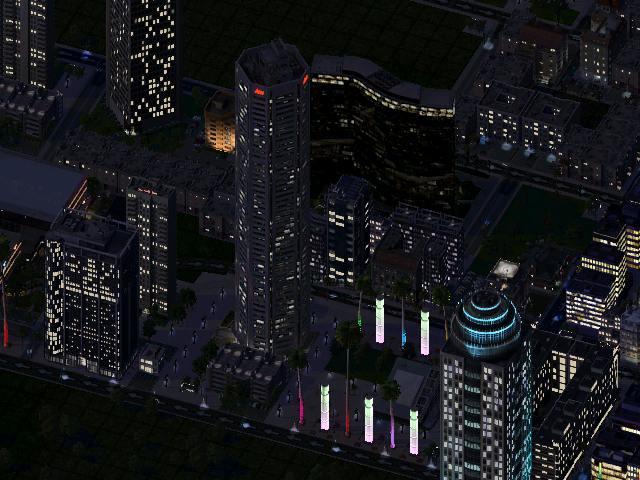
As you may know I haven't updated this city journal for a few weeks so I decided to show the progress so far. Yes it's a little disappointing because some areas aren't fully developed but still at least I give you my progress on this Hawaiian island so far.I'm still waiting for some Hawaiian themed houses to developed so I'll wait to develop the housing areas.


.png.f8dd2ca086c6218862dc02bb84d902f6.png)






-
Recently Browsing 0 members
No registered users viewing this page.
-
-
-
City Journal Statistics
-
Total City Journals3,961
-
Total Entries22,822
-
-
New Entries
-
-
Recent Comments
-
 That's a lot of industry! Im curious, where are the commercial zones in the city? I couldn't spot them.
 -

By ilikehotdogsalot · Posted:
Lovely airport! Nice to see Pan Am made a comeback in your city! -

-
-

By Tyberius06 · Posted:
Very cool images and nicely designed airport! Great work! -

-
-
those patterns are really cool! You're a patient planner. congrats!
-
 Can't remember what I voted last time. I think it was a few farms. Anyway I'll go with SAND DUNES today.
 -

By justforfun · Posted:
Ploppable textures would amazing! Meanwhile I also made a small set of S3D fillers. Of course they don't work so well on slopes, haha.
-