

 Supported


About This File
After the Dutch Golden Age, in which The Republic claimed world supremacy and successfully became a world hegemon until the British took over after 1673, a long period of economic decline started off for the important trade centers of Holland. Cities like Leiden and Haarlem dropped in terms of population (e.g. leiden lost almost 40.000 inhabitants while Haarlem lost 30.000 of its inhabitants in 1820 compared to a population of 45.000 from the 1650’s). A lot of buildings were torn down and massive empty spots arose within the city walls.
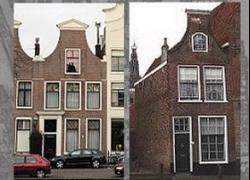
It was in these dark days that lasted until 1850 that these neckgables were built by the few left wealthy inhabitants in the city of Haarlem, thus replacing older (and probably much more decorated) buildings from the 1600’s. Much simpler in design they gave the once rich and important city a more realistic face, thus contributing to the new more modest role in the European trade network.
Well, anyway, after 1850 the city regained its role in the Netherlands to become the fifth important city before WWII (it was the 4th biggest city during the Golden Age). After the war, Haarlem lost its role again to upcoming not-historic cities like Tilburg, Eindhoven, Enschede and Apeldoorn due to the lack of space in the surroundings and national policy to grow bigger. But the city center remains with over 1100 monuments and an almost perfect historic and cultural atmosphere.
-
 3
3
-
 1
1


