


Port of Tyrell: South Terminals

Welcome back to our tour of the Port of Tyrell. In this second part, we're going to be looking at Seaport South, which as stated previously is the true centerpiece of the operation. Indeed, the colloquial "Seaport South" title collectively refers to five different operational piers, together comprising over 4/5ths of Tyrell's total cargo capacity in the form of containerized cargo, break bulk, oil, liquified natural gas, grains, and assorted food stuffs. This area includes some of the newest facilities in the port, but near the mouth of the Neskowin River one can also find the lesser-used remains of mid-century warehouses and wharfs, echoing the original permanent structures which started to turn a marshy estuary into the economic powerhouse you see today.
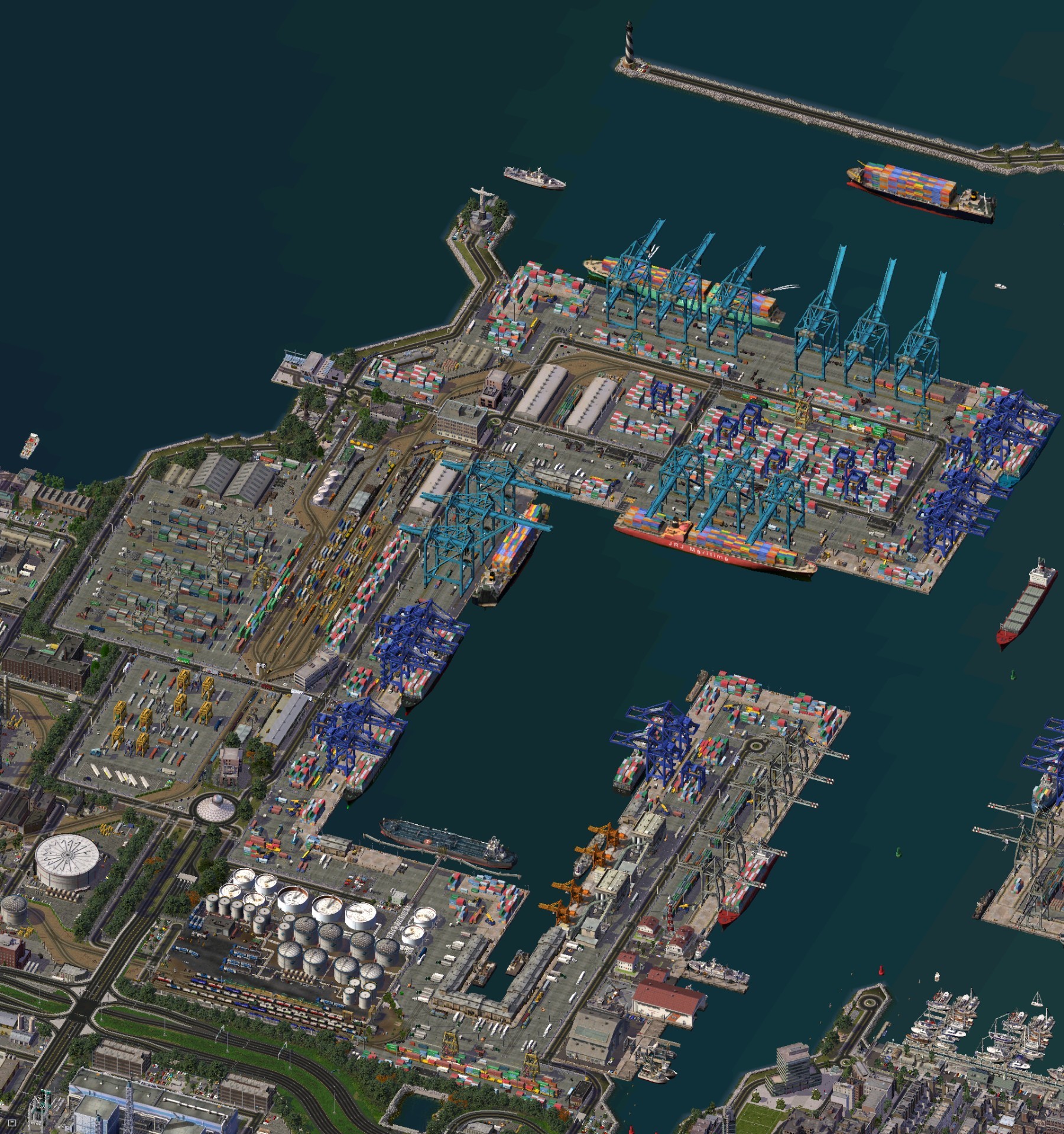
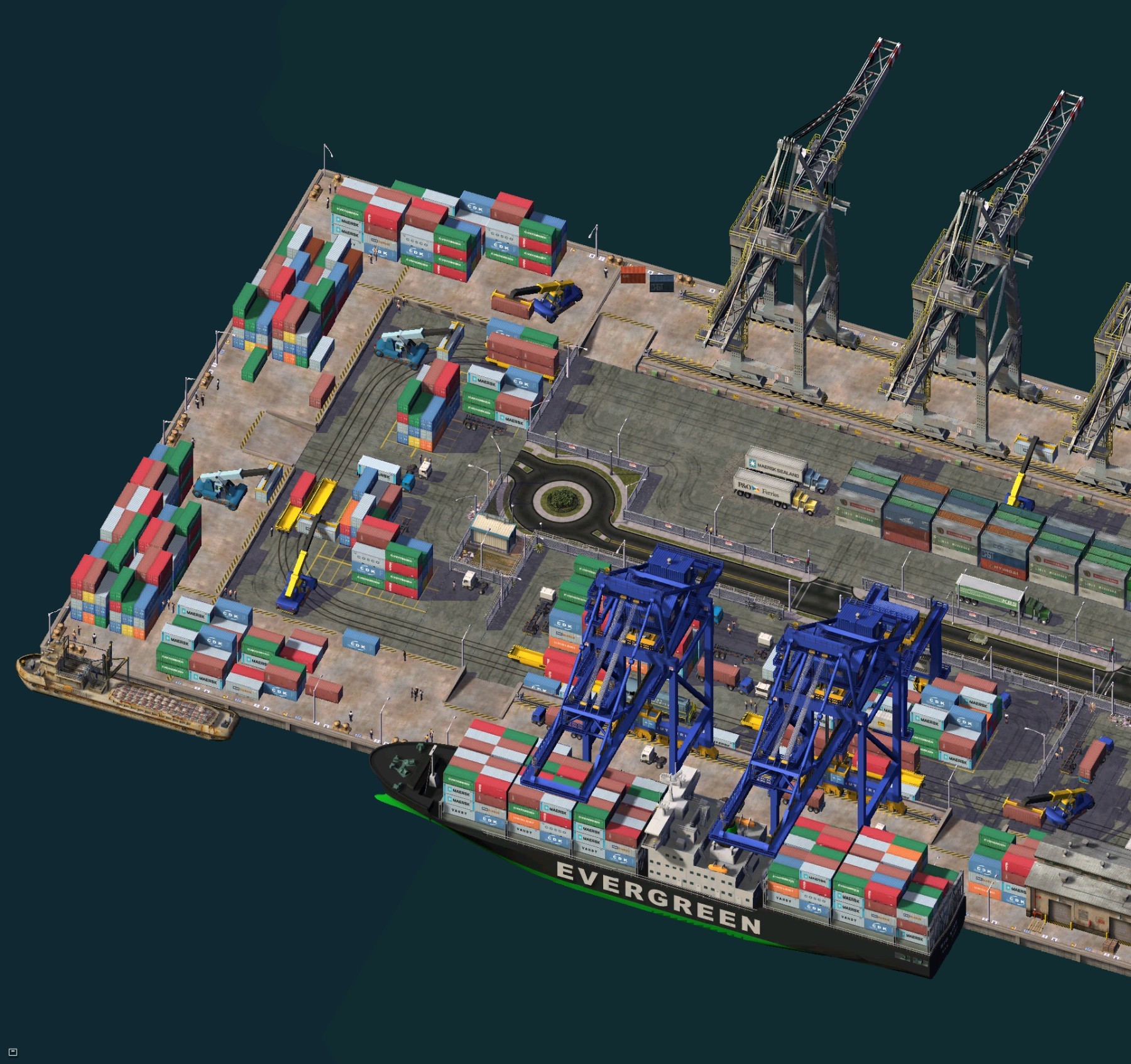
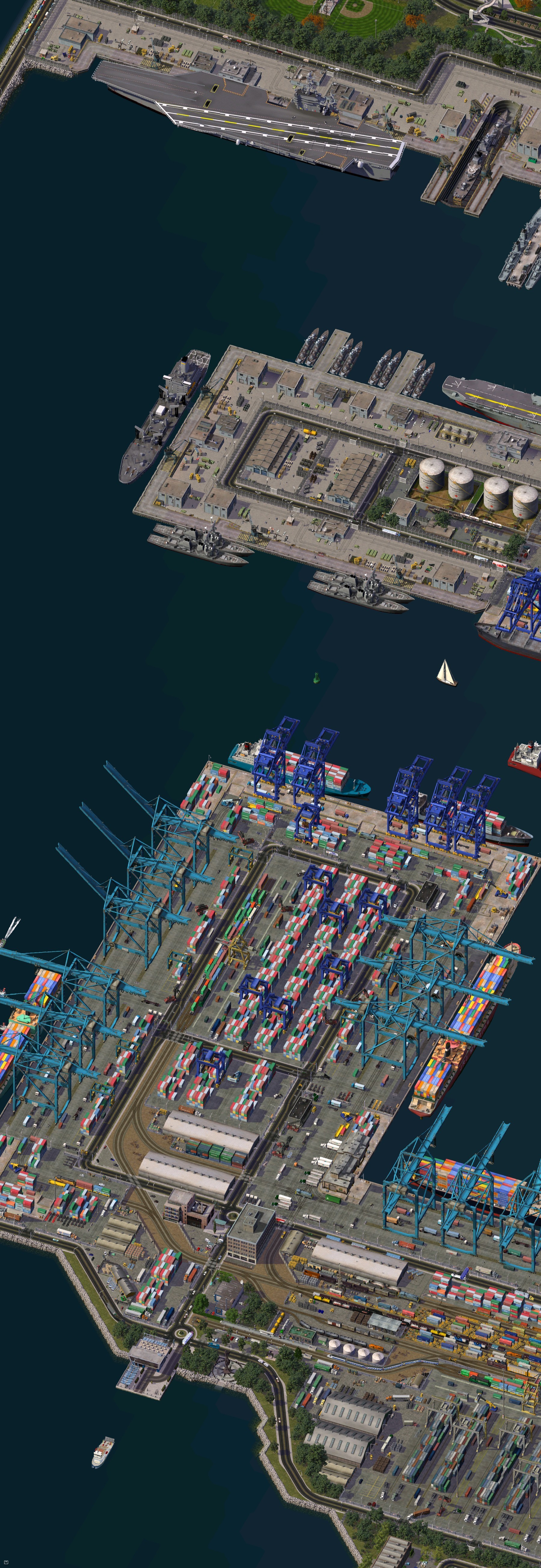
We'll start with the most recent development: the deep-water port facilities of Piers F and G. Completed in 1993 and extending far from shore on reclaimed land, this artificial peninsula services the latest generation of Neopanamax super-carriers. As such, it boasts state-of-the-art automation and logistics technology to sort and handle the enormous volumes of container freight it sees each day.

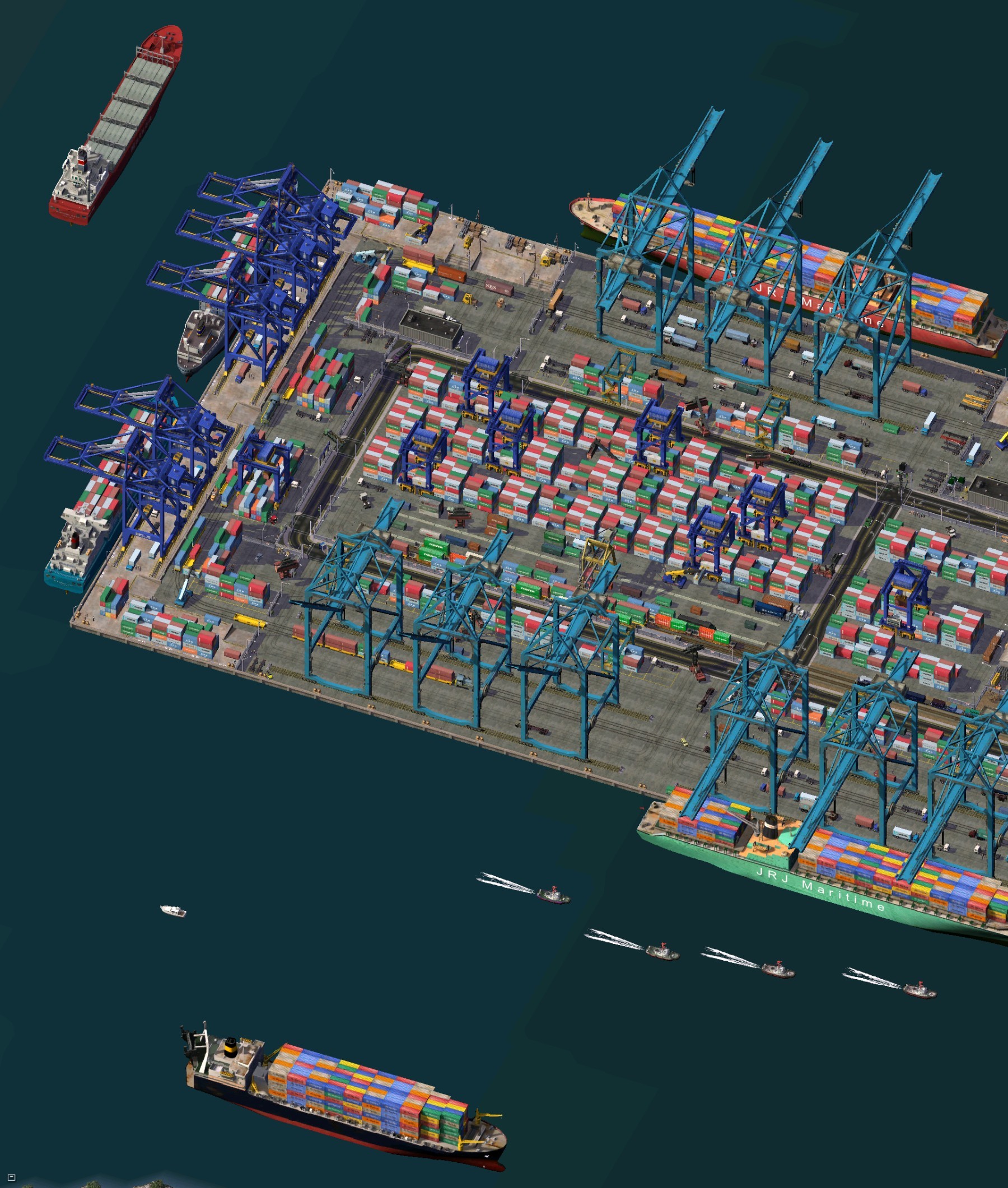


Moving inland off of Piers F and G, we begin circling counterclockwise around Inner Harbor South, beginning at the warehouses, railyards, and truck lots of Piers C and D. In addition to handling most mid-size shipping which docks at Tyrell, this area serves as the main logistical hub of the port. This is where nearly all the cargo entering Seaport South is sorted, catalogued, and loaded onto whichever truck or train will be used for the overland portion of its journey. The governing offices and operation centers of the port can also be found here.
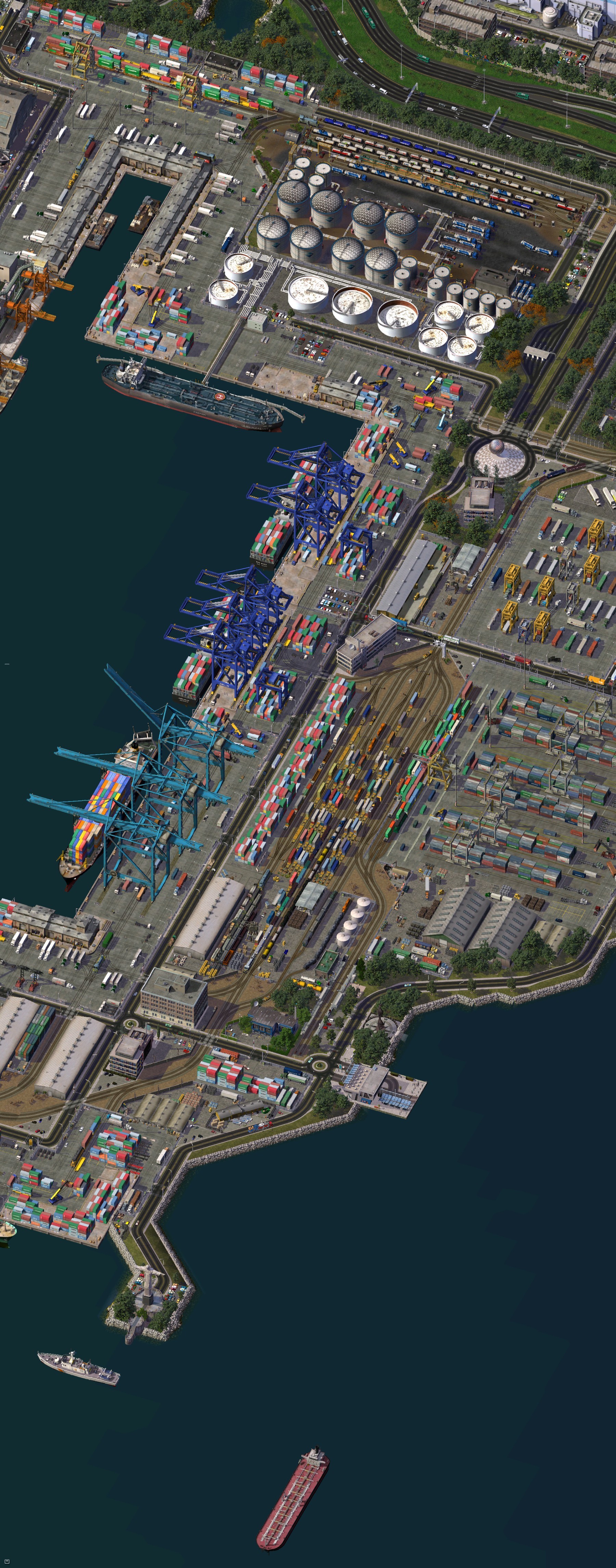
At the mouth of the port, incoming sailors are greeted by the iconic Cristo de la Concordia statue, now as much a symbol of the city of Tyrell as its opposite partner: the Shipwright's Lighthouse.

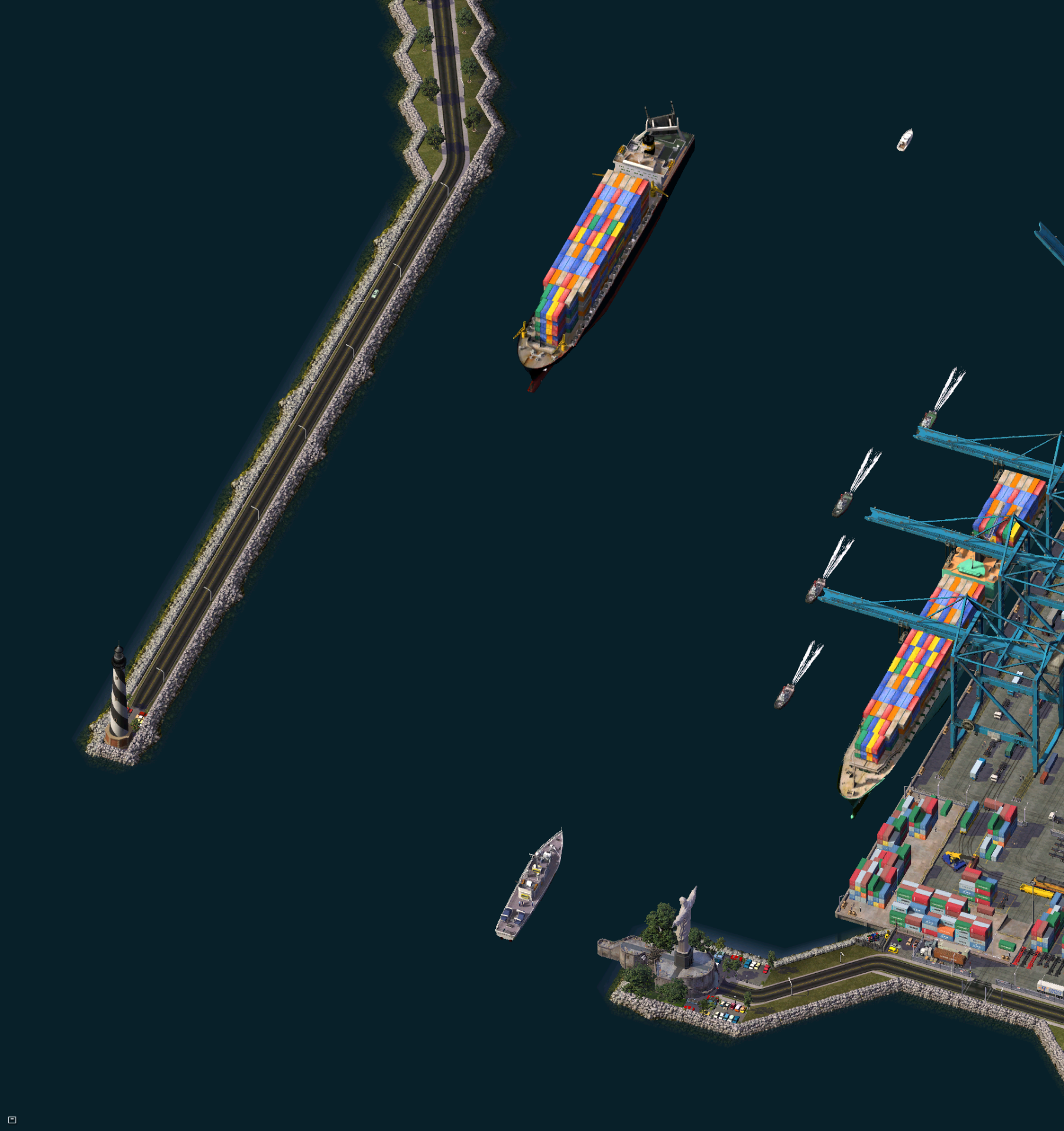
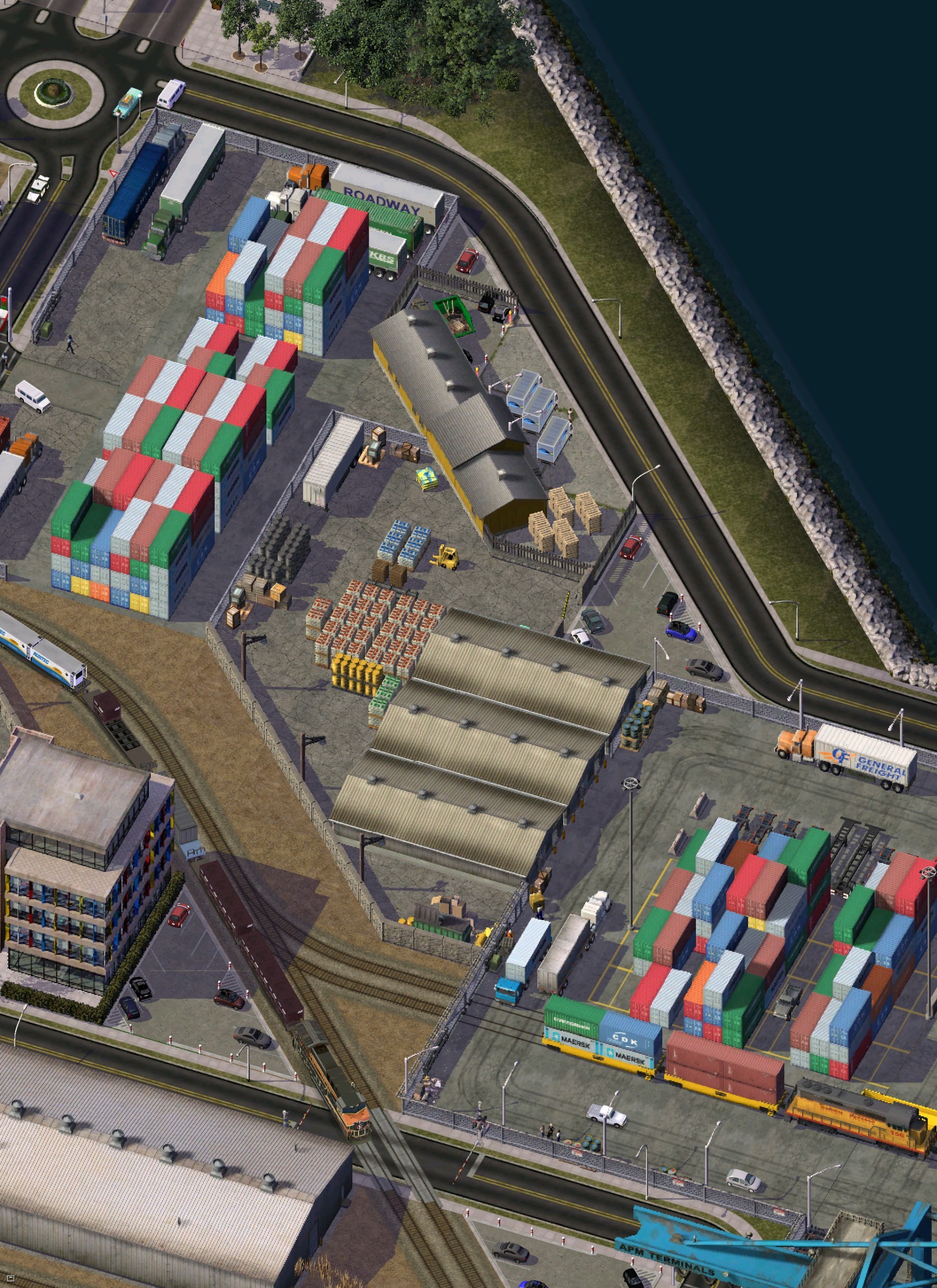


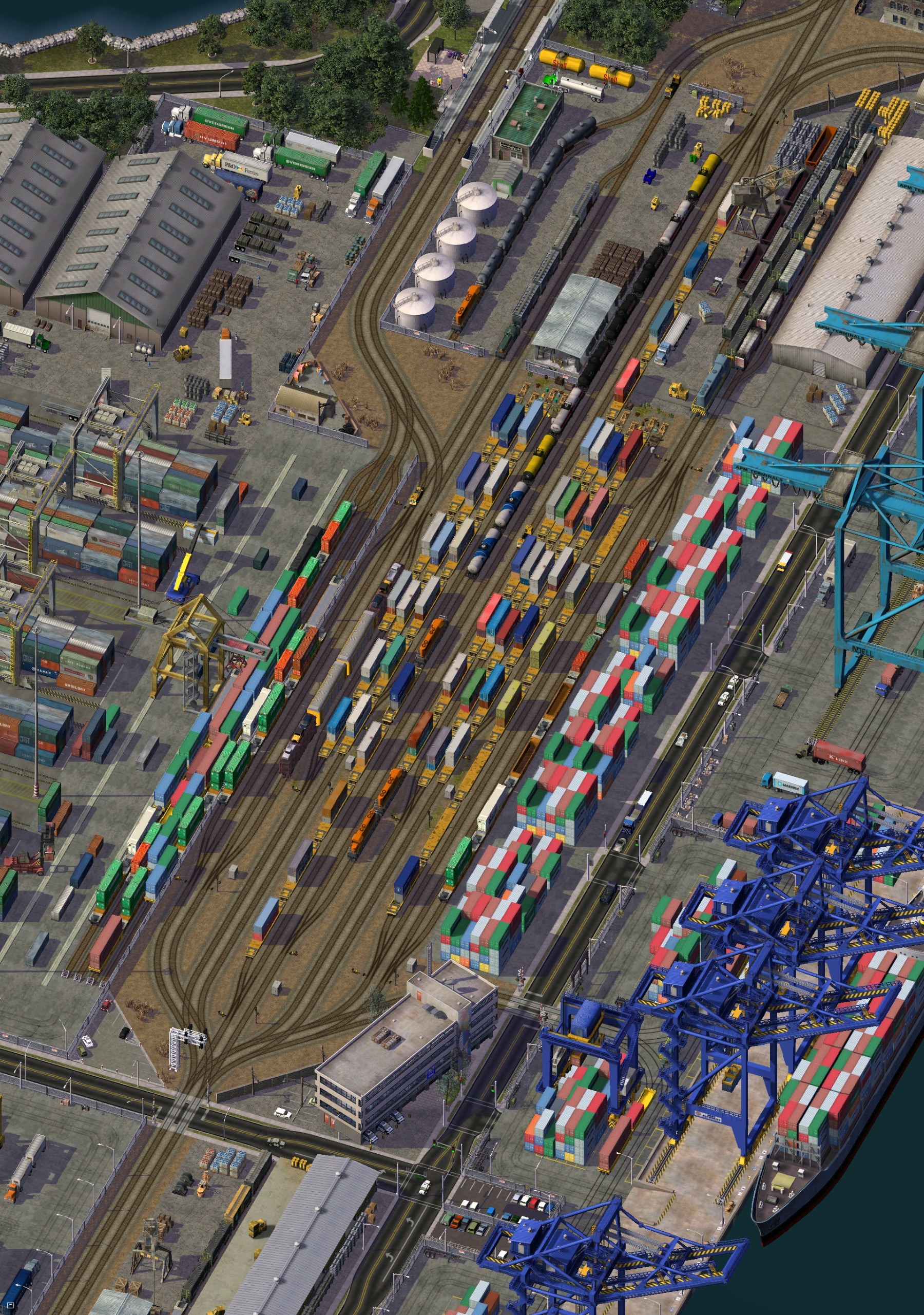
A typically busy day of train shunting behind Pier C:


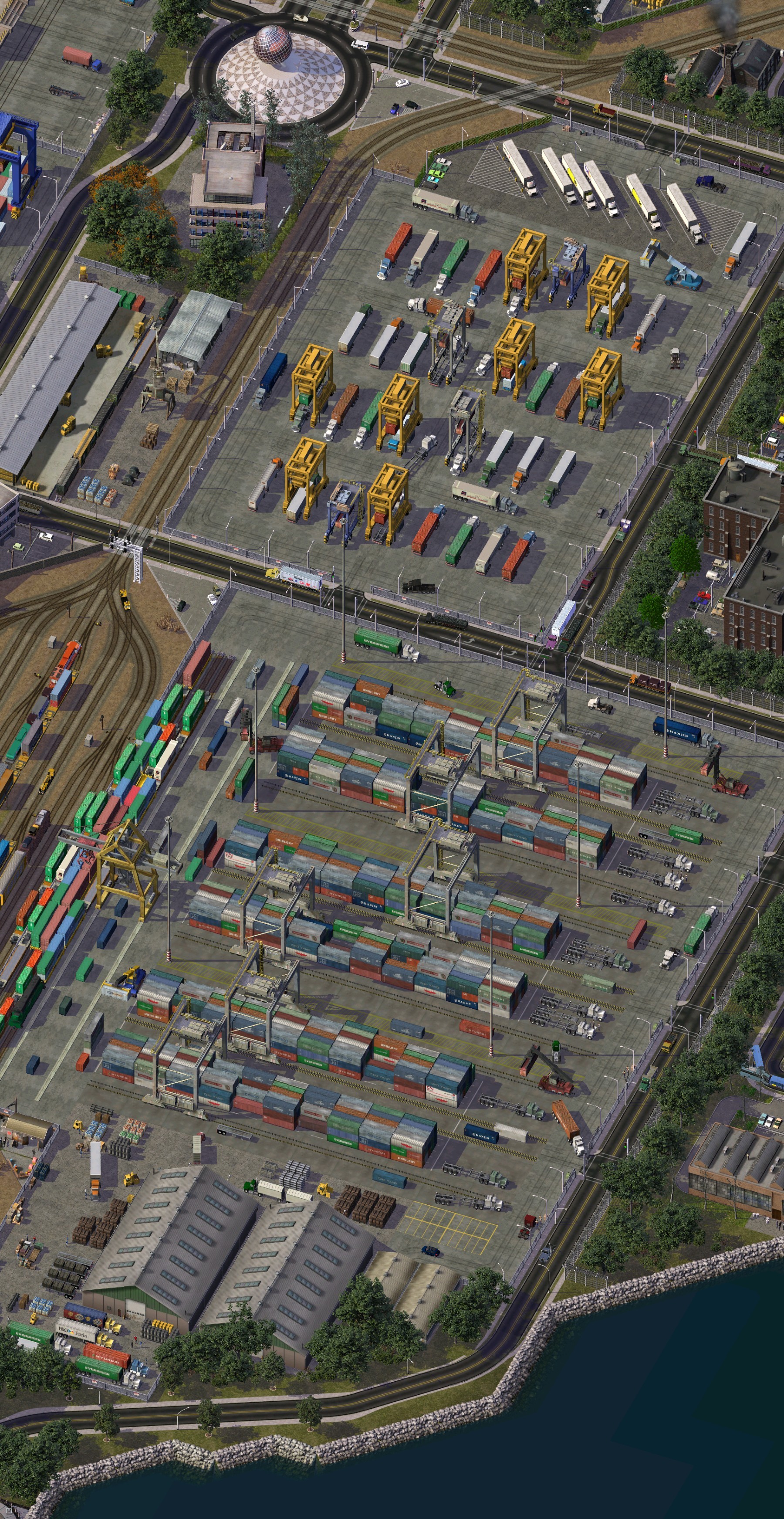

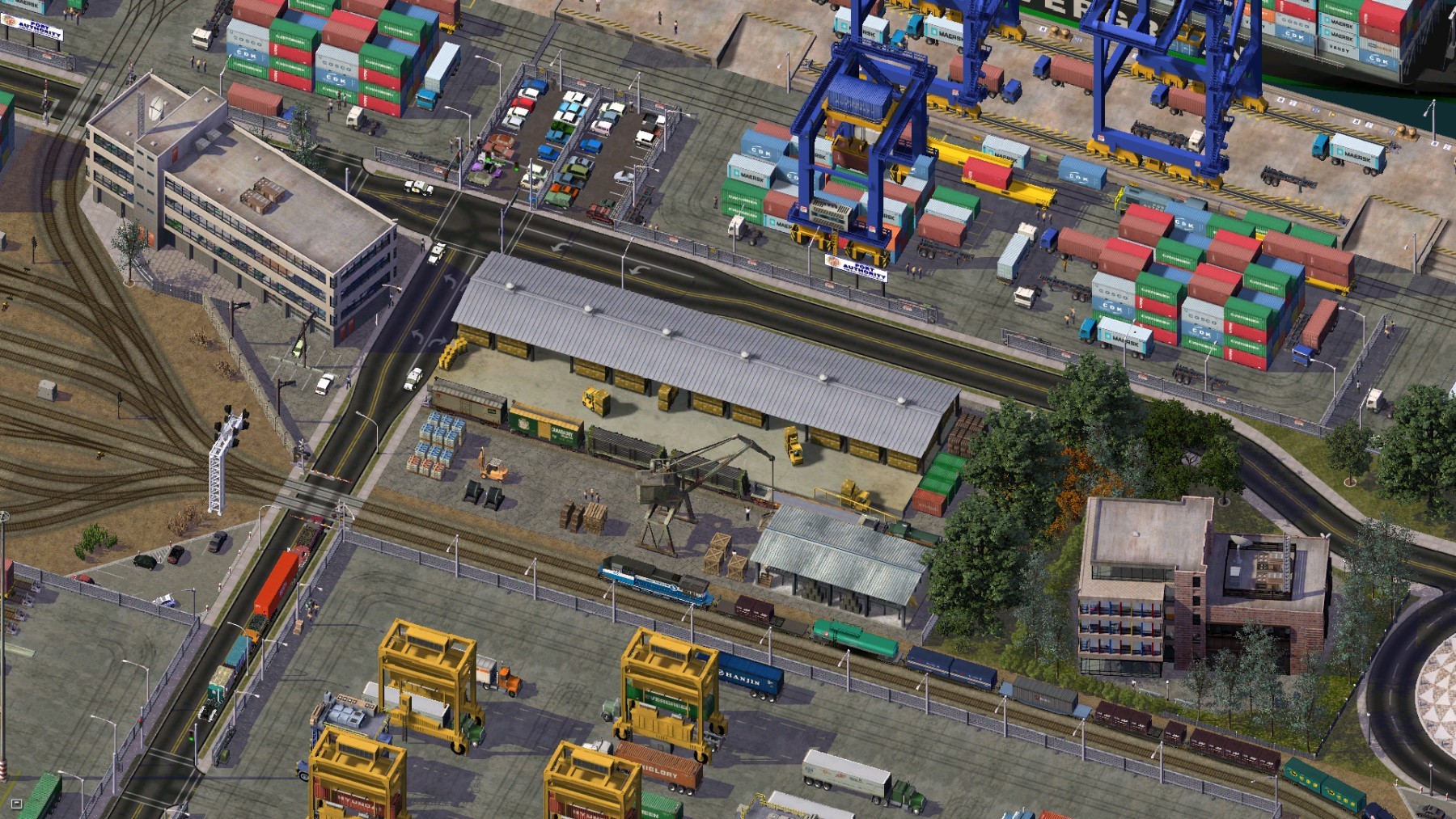
Continuing our circumferential tour, we come to the main entrance and checker station for this area of the port, as well as the storage and processing facilities for oil and LNG imports.
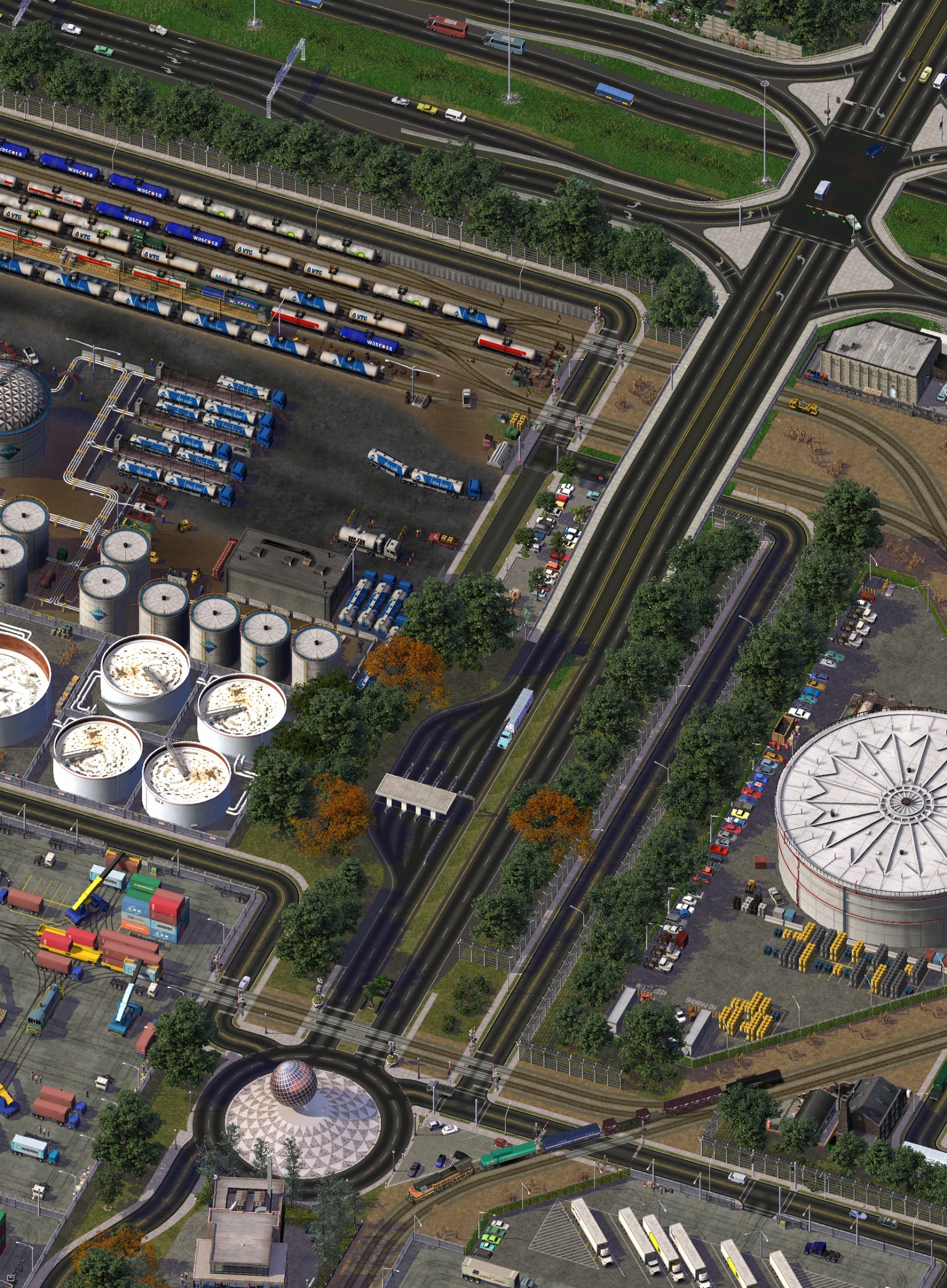
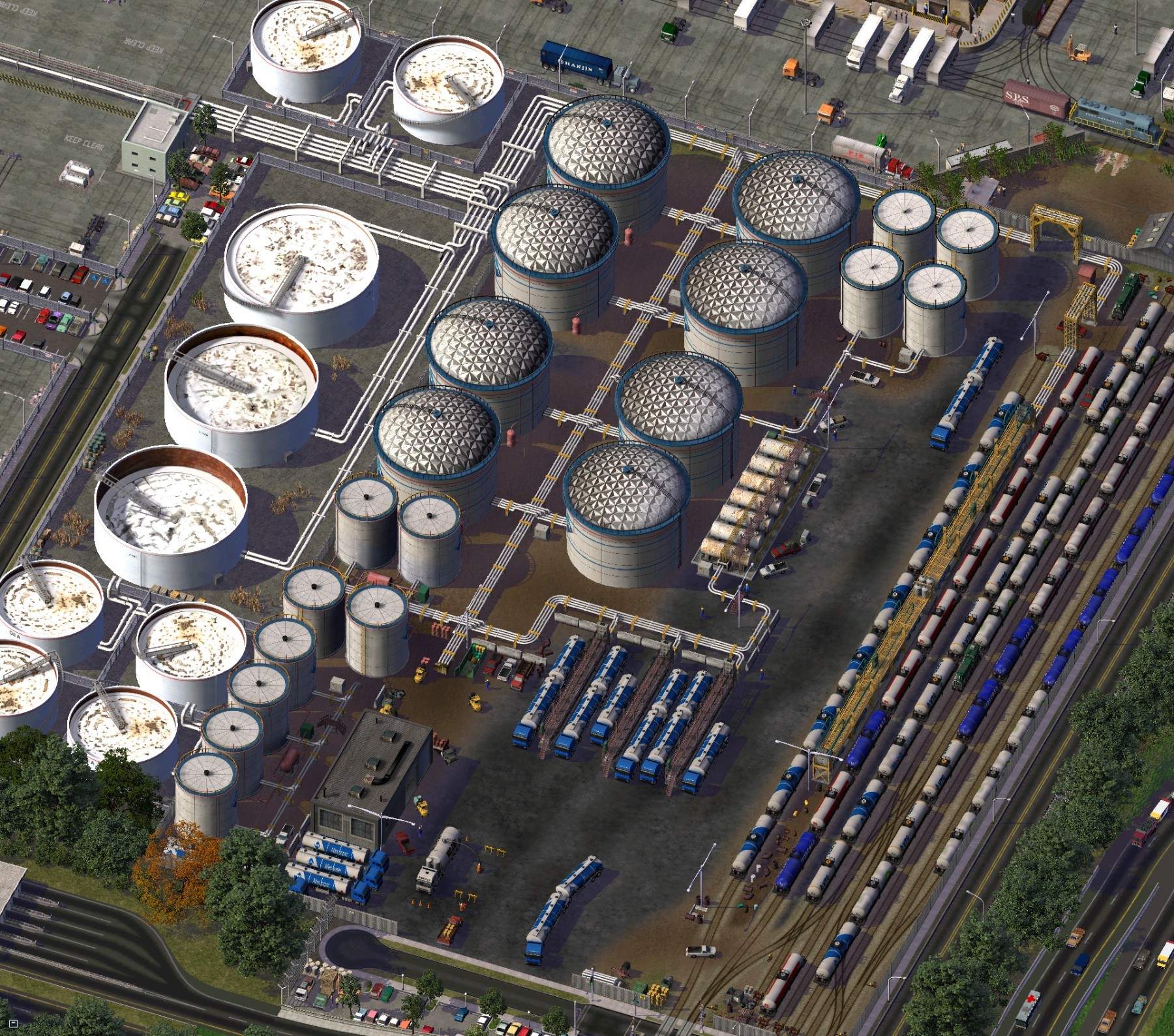
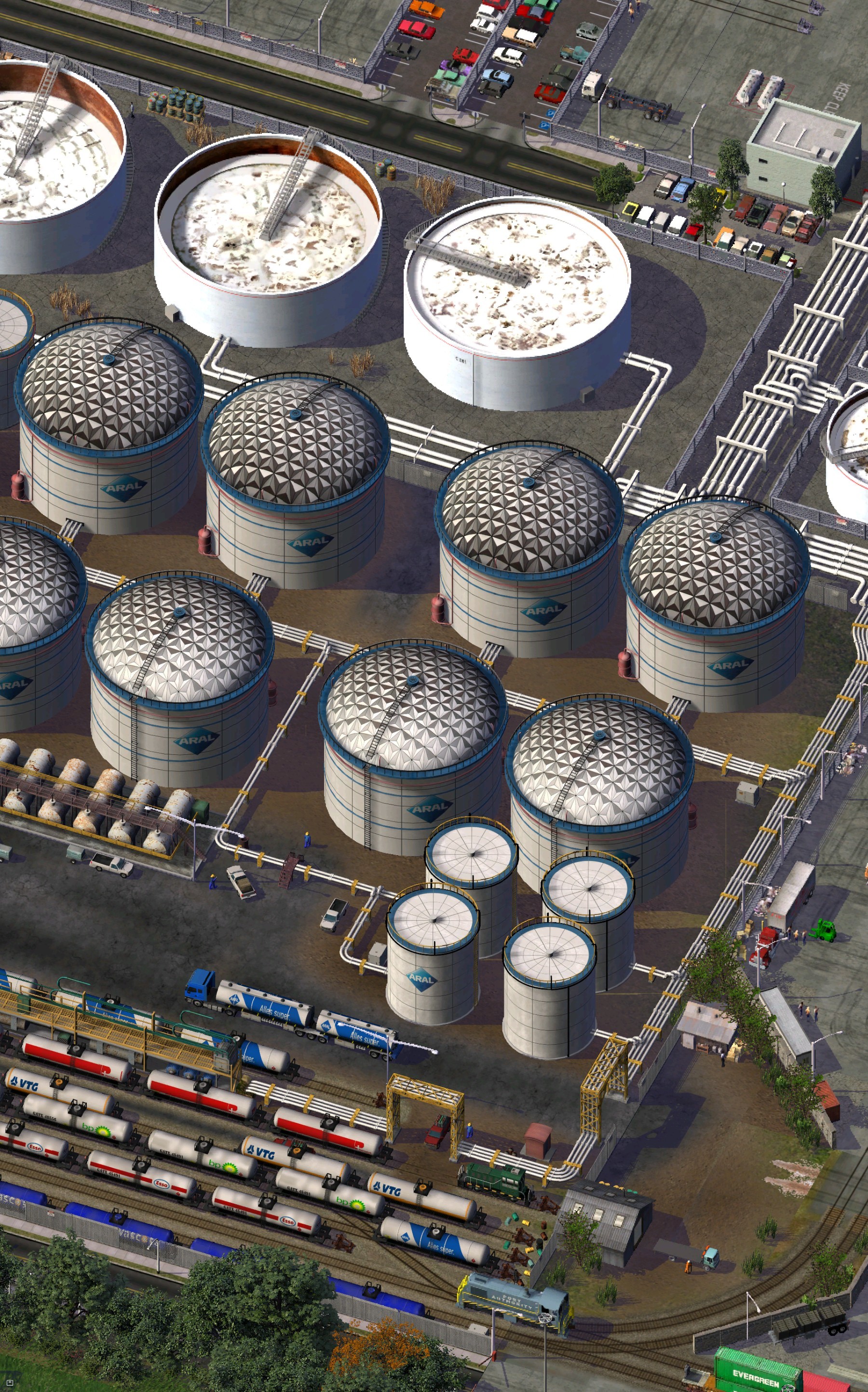


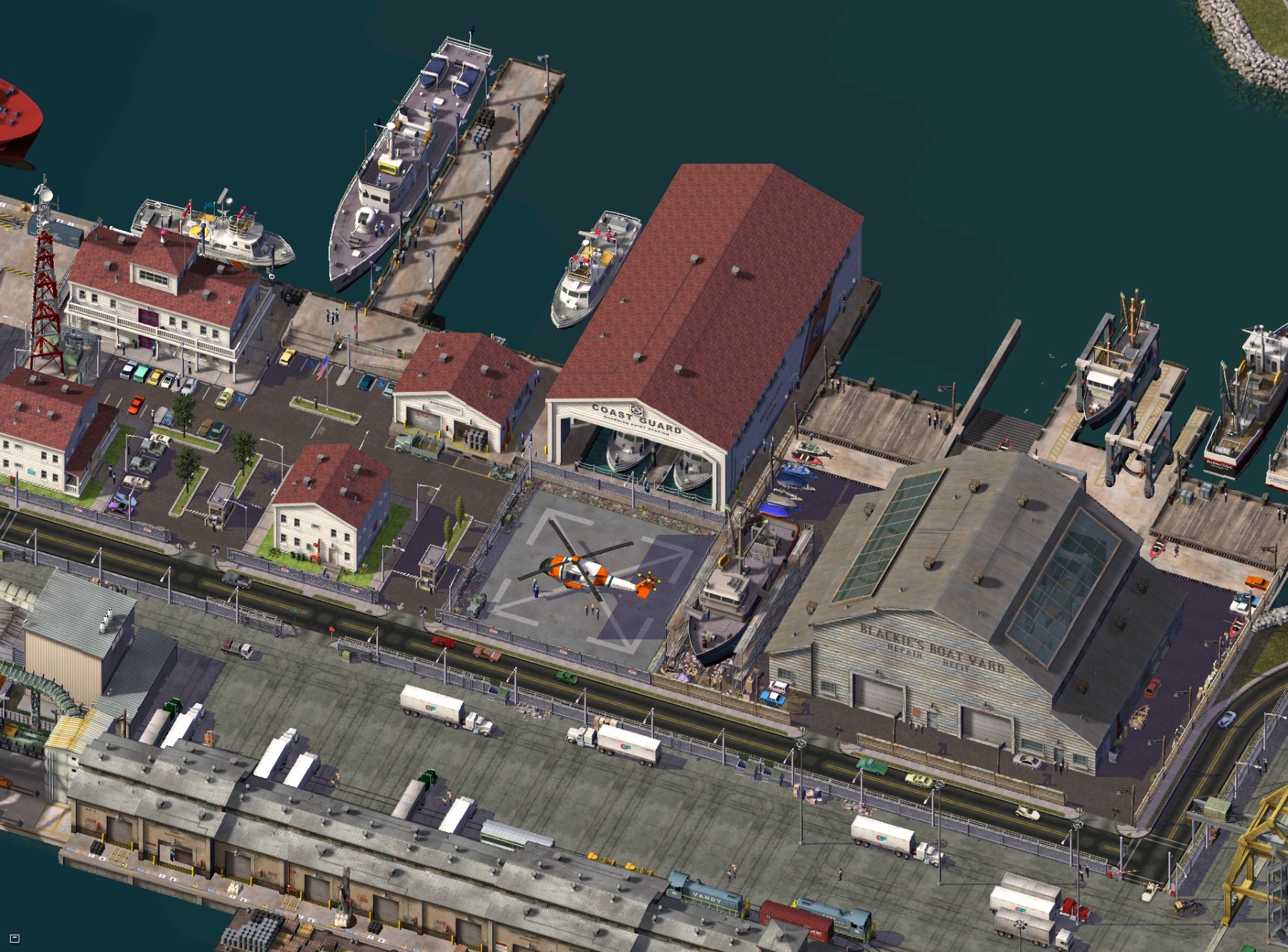
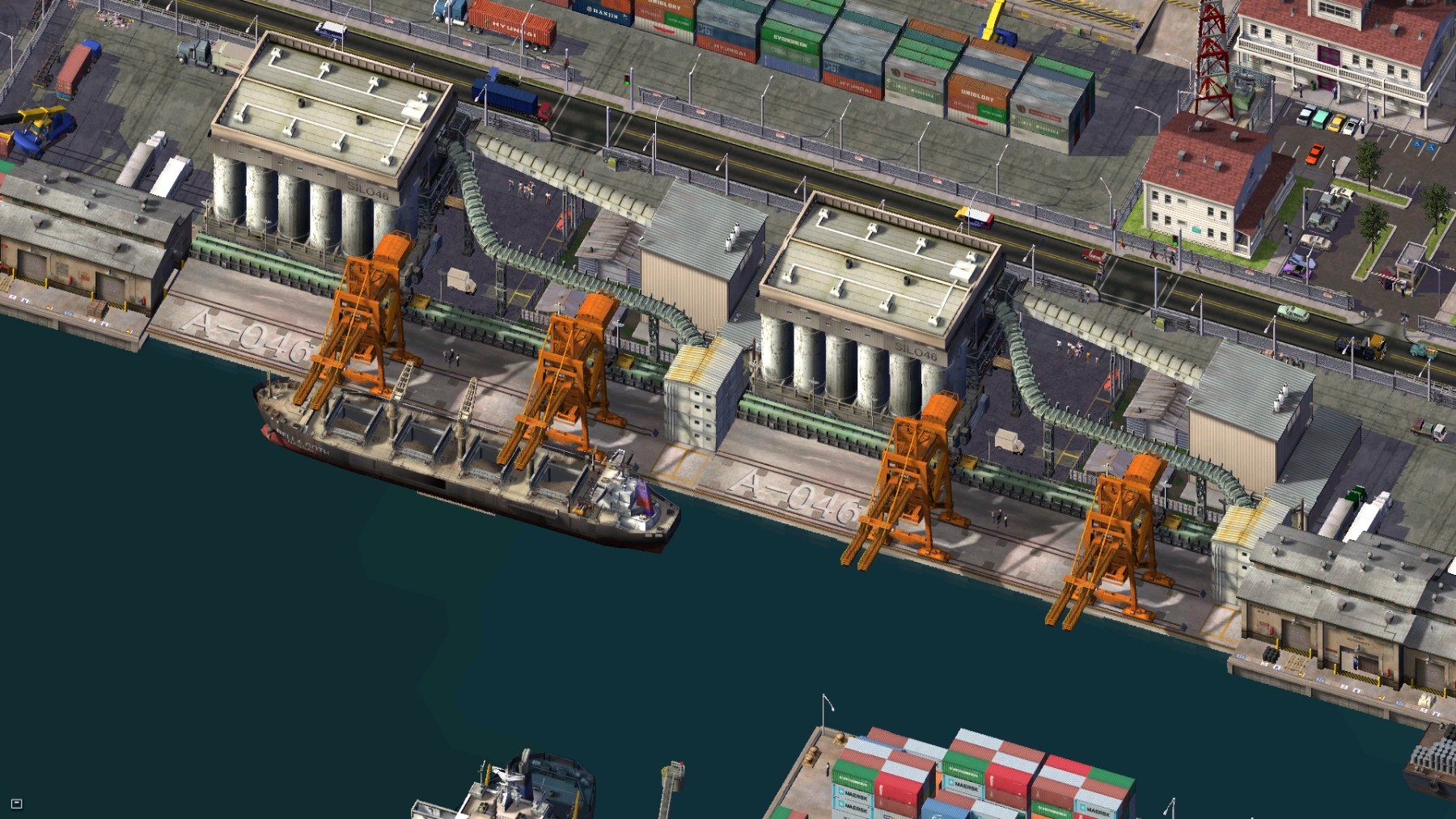
Next, as we near the mouth of the Neskowin, the entirety of Pier A comes into view. This facility consists of the aforementioned oil/LNG infrastructure, along with warehouses for break bulk and food storage, grain piers, a coast guard station, and assorted maintenance and processing depots. This is the oldest part of Seaport South, and while it has been retrofitted to accommodate containerized freight coming off of Pier B, many of the buildings are original and give a sense of the minor regional hub Tyrell began as.


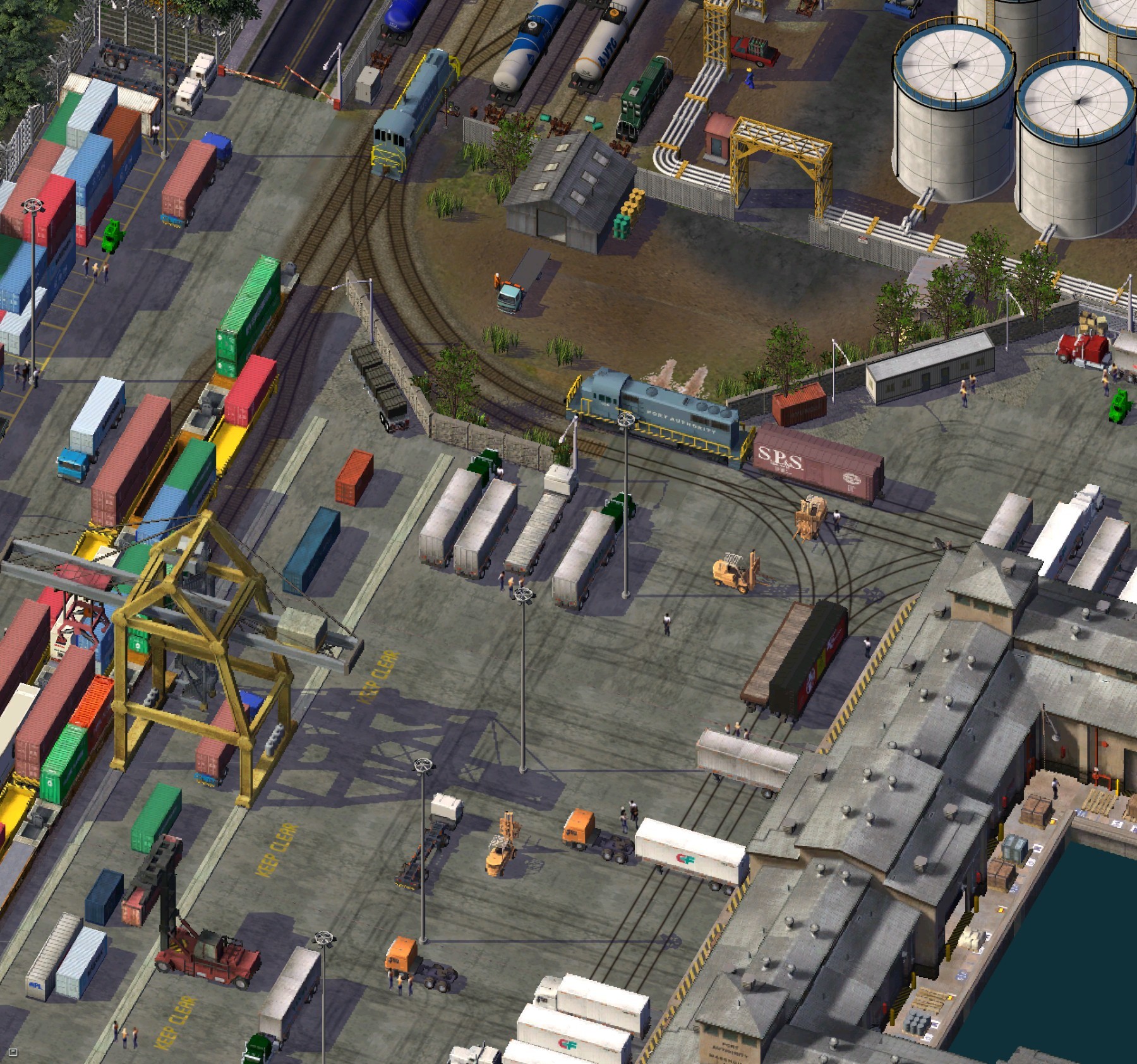

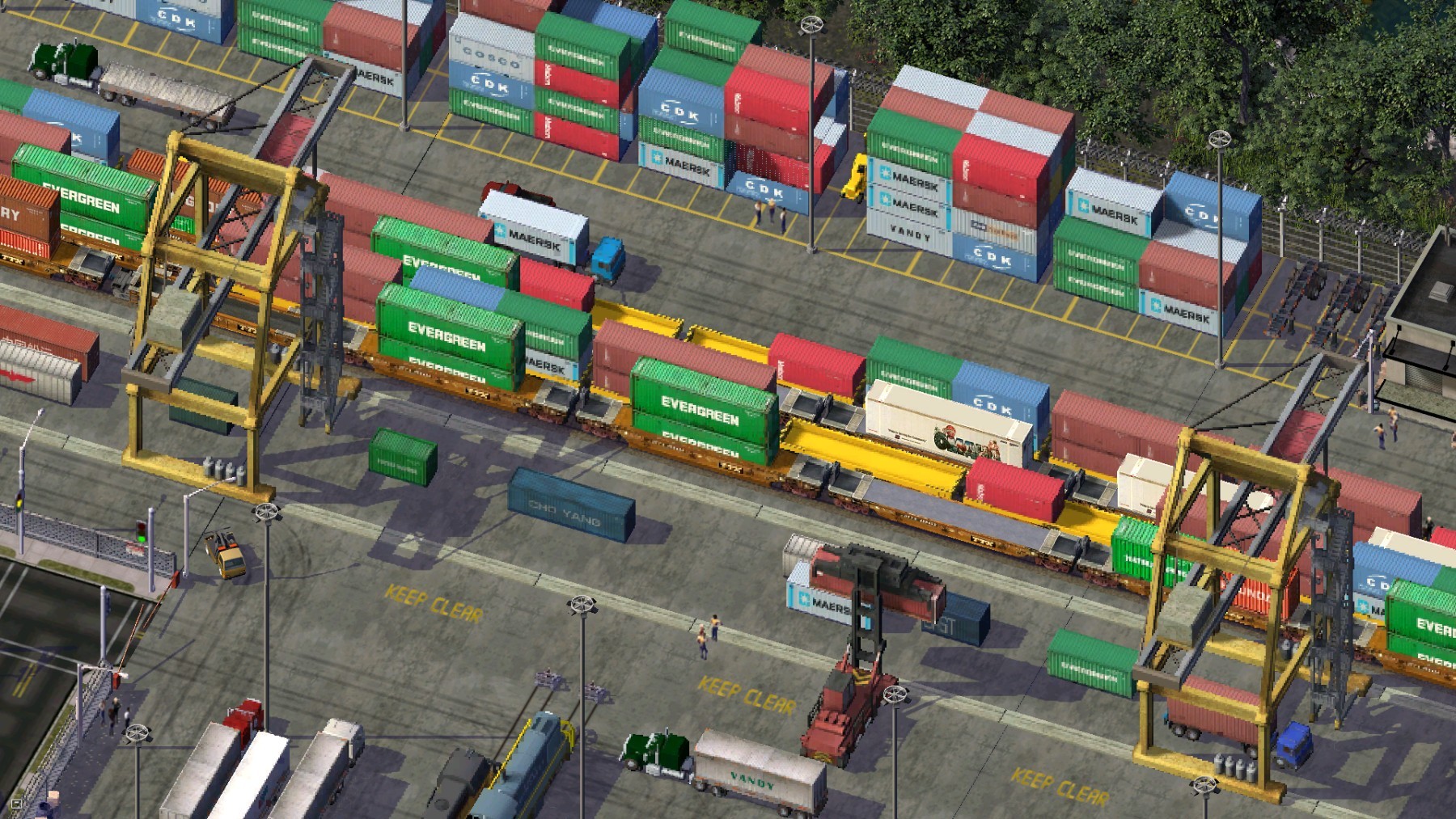

Finally, we come to Pier B. This was the first modern container port in Tyrell, built before even Seaport North was re-tooled in the 1970s. It's the smallest pier, and as such hosts the same older, smaller-scale ships found across the channel on McElderry Island.


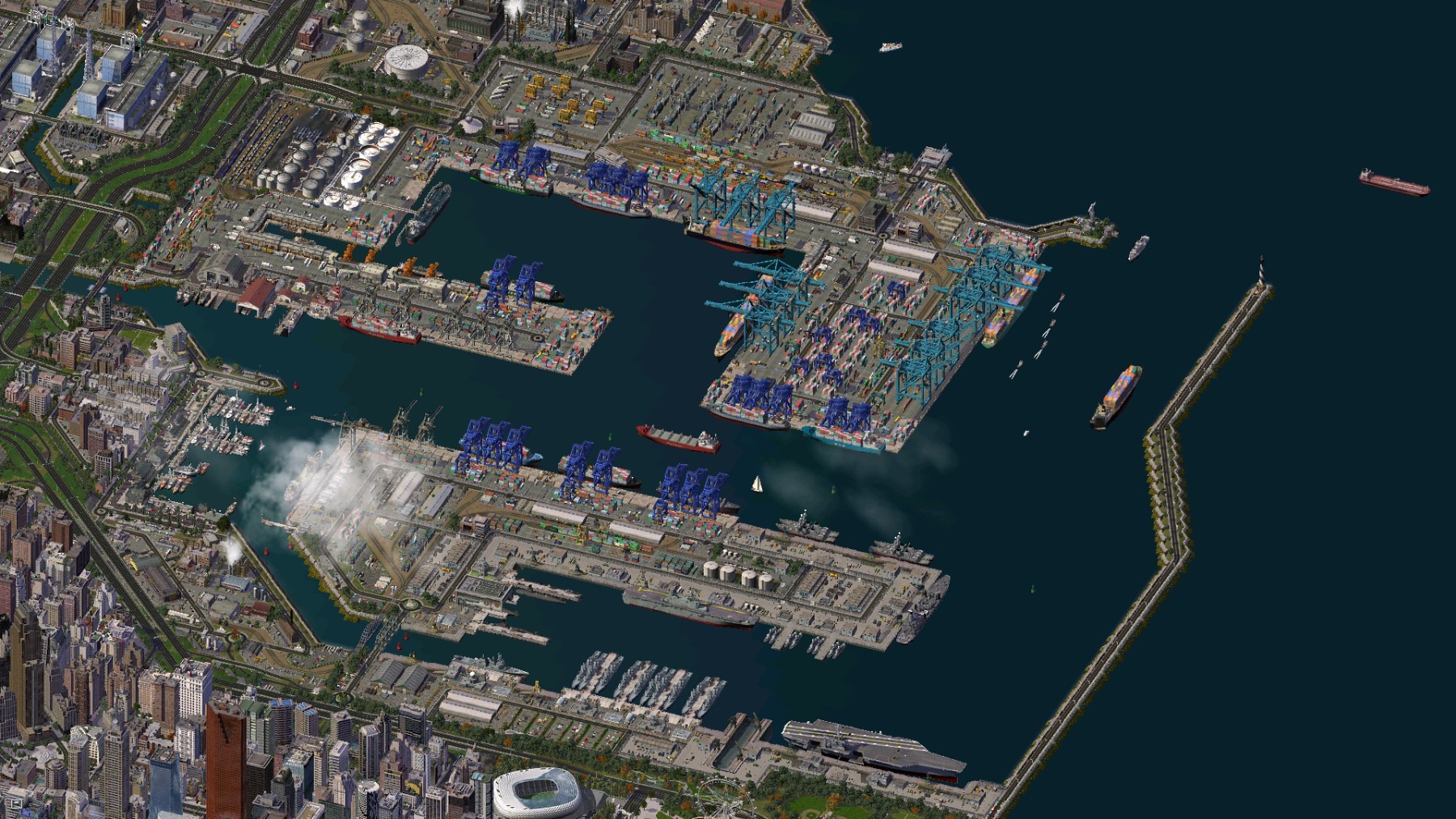
Thus concludes our grand tour of the Port of Tyrell. We got a taste last entry, but next time we'll be diving deep into the industrial heartland of the city, where we'll get a look at just what all those imports are used for. Before then, I'll sign off with some overview shots of the entire port, now that we've covered everything in detail.

-
 12
12


5 Comments
Recommended Comments
Sign In or register to comment...
To comment in reply, you must be a community member
Sign In
Already have an account? Sign in here.
Sign In NowCreate an Account
Sign up to join our friendly community. It's easy!
Register a New Account