


Thornton Hights

Moving to the west from "Abbey-Upon-Tyne", along the river "Tyne", you will eventually drive through the town of "Thornton Hights".
Stretching along both sides of the river "Tyne", it can be best described as a suburb on the outskirts of "Abbey-Upon-Tyne". A relatively new village which was only founded around the 1880's as a, although lying on the river, small farming community since this village would have never dreamed of competing with the big rival in the east. Soon, people from "Abbey-Upon-Tyne" started to move here, seeking an alternative to the ever rising house prices in their hometown. The town became popular and with the extension of the "National Railway" in 1920 to the town, the industry and commercial businesses started to move to the city - but for what price. The once so small and peaceful village soon became a loud, noisy place and at the peaktime, counted around 30.000 inhabitants. The farms were driven out of the city and soon house prices were the lowest in the entire county and nationwide, which caused a lot of people to move away from "Thornton Hights". In the 1940's, the time of the "Tyne-Midlands-Cannal" constructions, the majority of houses were abandoned and a big part of the heavy industry needed to move away since their production methods were not in accordance with the new environmental laws imposed.
The city governement saw it's chance to bring the village back to it's old beauty. At this time the village hit rock bottom with only 200 inhabitants remaining and hardly any industry and businesses left. But the the change came around the 1950's & 60's. The construction of the new M7 was propsed by the National Government - it was to connect the east & west coast, parts of the midlands & the "Abbey-Upon-Tyne" Airport. The governing mayor at this time ("Jules Heartly") went into long and exhausting negotiations with the National Government to point out the importance of "Thornton Hights" to the region around "Abbey-Upon-Tyne" and the result was that a new layout was proposed which runs now party through the town.
Since then, the town went a long way and noumerous environmental & other regulations caused the clean high-tech industry to settle in "Thornton Hights". And with the clean industry, the people returned.
Now "Thornton Hights" is a small, clean, typical middle-class village counting around 10.000 inhabitants. It's not a rich village, neither poor but surely a nice place to live.
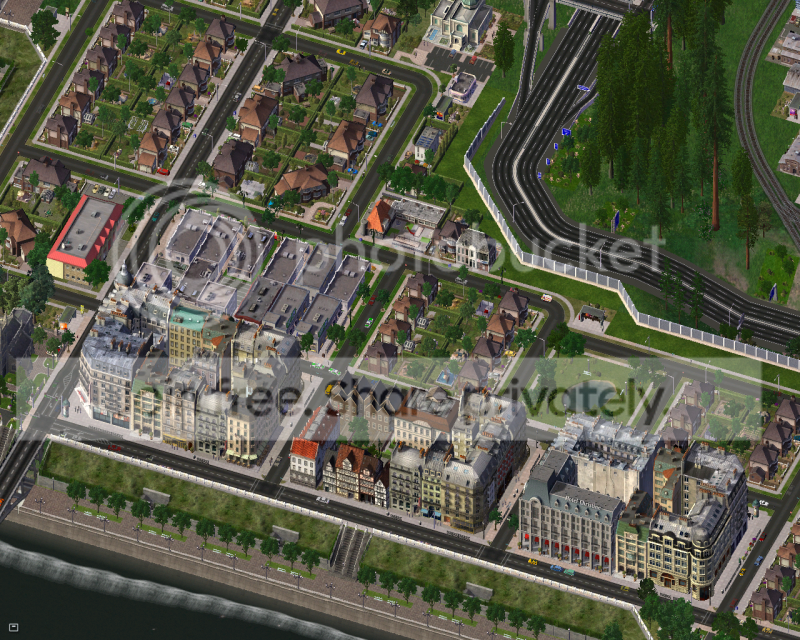
The town centre with some stores and the M7 (or, like the inhabitants call it: "Heartly Way") running past it in the backround. The waterfront also experienced a major renovation during the 1990's and attracts lots of visitors daily. Within the town centre is also the main police station & the "Greenhead Grammar School" (tudor style building in the middle).
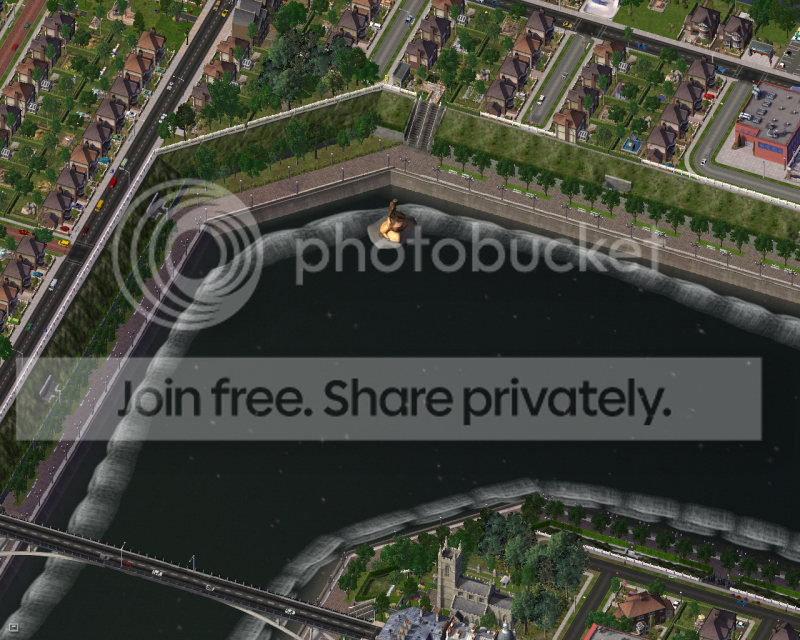
On the northern riverside, the terrace houses continue and within the river, you can see the sculpture of the "Lonely Mermaid", being build here in the 1970's. "Bulls Green Bridge", the only bridge connecting both riversides can be seen in this picture. You can also see the old church which has been build in 1898.
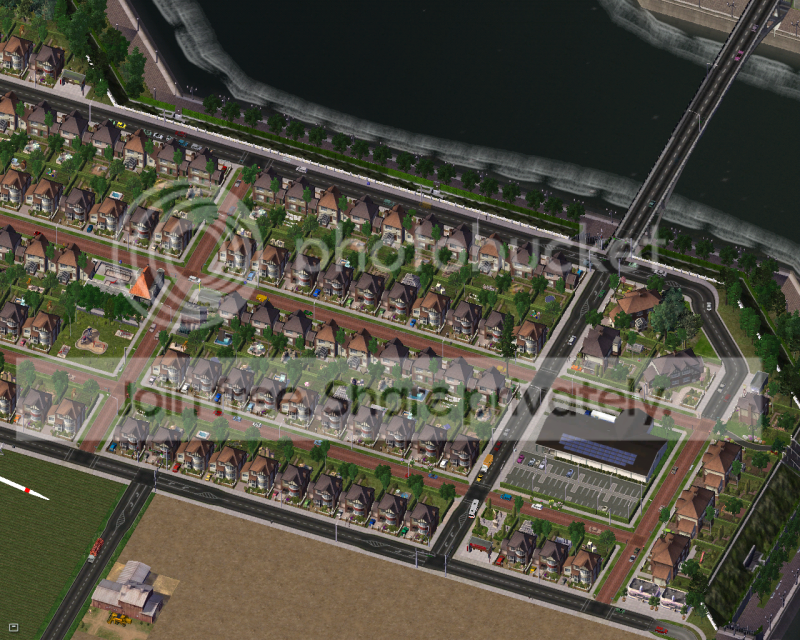
"Bulls Green", one of 4 boroughs in the town. A typical suburban scenery. The "Aldi" supermarket is pretty much the centre for this side of the river. Also, the kids in the "Bulls Green School" are in a never ending fight with the kids from the other side of the river. In particular from the "Greenhead Grammar School".
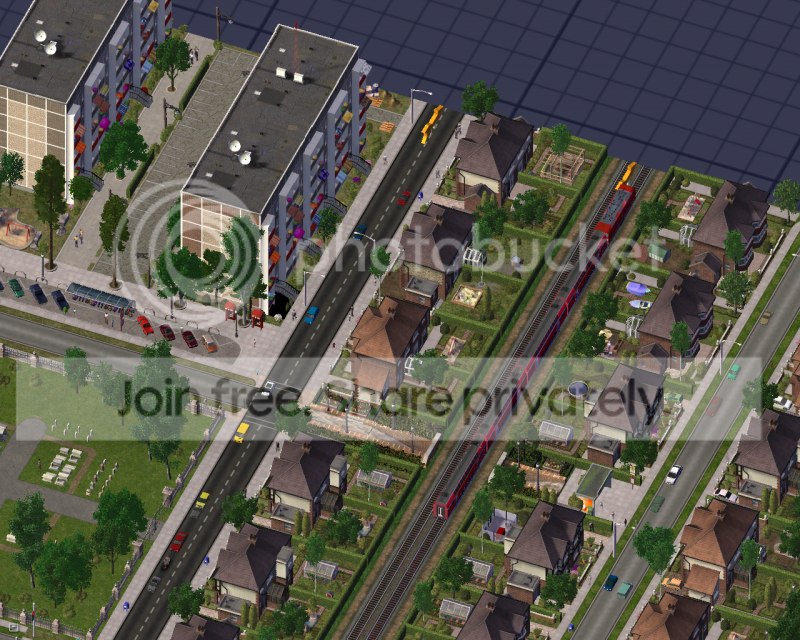
The outskirts of "Thornton Hights". Near the main cemetery, the social welfare homes have been build to proivde affordable homes for everyone.
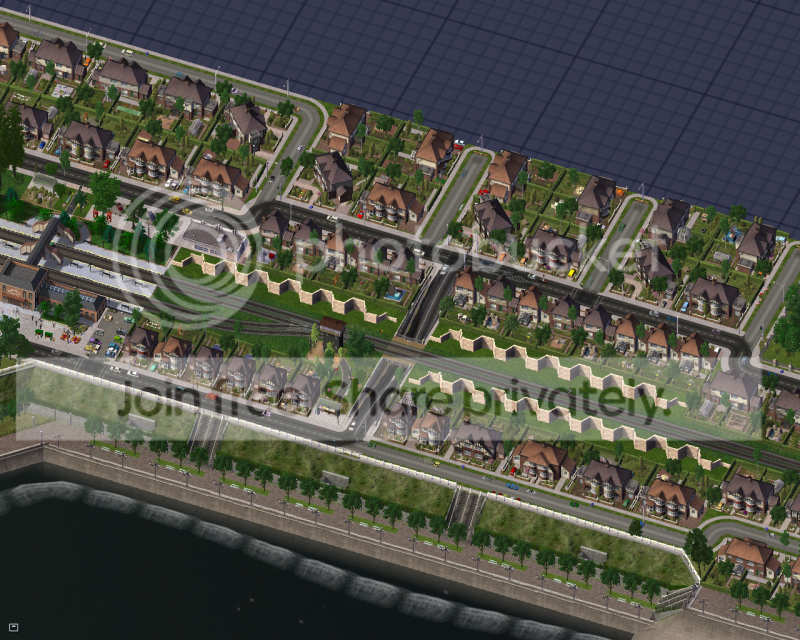
Going east, towards the town centre, you will enter the borough of "Hempton" with the Main train station. Because this railway line is quite heavily used, the city build sound walls to protect the citicens at least a bit from the noise pollution emitted by the trains.
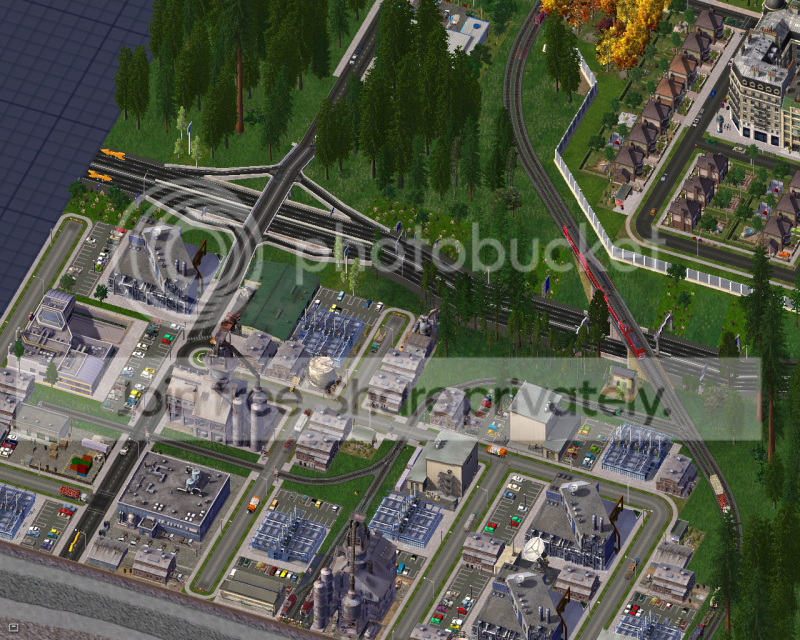
In "Pearlwort Heath", the major part of the high-tech industry has settled. Connections to the M7 & the Railway guarantee a fast delivery of all goods produced.
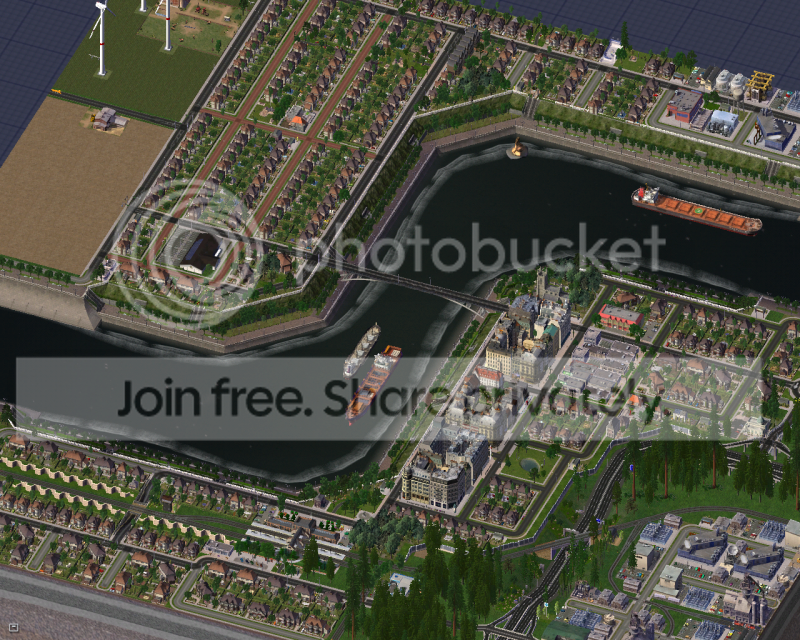
And finaly, a picture of the town as a whole with the "Tyne-Midlands-Channel" running right through it and the M7 at the east.
Hope you enjoyed this update!
Comments are, as per usual, welcome and appreciated.


2 Comments
Recommended Comments
Sign In or register to comment...
To comment in reply, you must be a community member
Sign In
Already have an account? Sign in here.
Sign In NowCreate an Account
Sign up to join our friendly community. It's easy!
Register a New Account