


Glowanceaster þá Burh Gescinan

<table border="0" cellspacing="0"><tr><td width="110">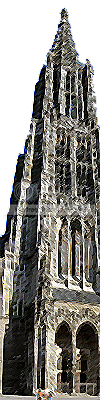 </td><td>

<br/>
Although Mearcgræf is the historical, cultural, and nominal centre of the Mearcgræf metropolitan area, Glowanceaster is the effective centre of the modern city, as it houses the main financial centres and many regional and national company headquarters.
Although the date of the first settlement of the Glowanceaster area is unknown, records tell of the coming of Bishop Allemius to the area in 604 to evangelise the Cimbric petty-kingdom of Arconsæt. Establishing his bishopric in the next valley from the Arconing capital of Arworth, he spread the word of God there until being made Archbishop of Eanceaster in 631. The name Glowanceaster, meaning 'Gleaming City' is said to come from the 'holy light' that shone down upon the Church of St. Peter that Allemius founded.<br/>
By virtue of having more space than either Mearcgræf or Arworth, and being the centre of the church in the area, Glowanceaster grew rapidly and has traditionally housed many more people than either of these 'more important' cities.
The city is dominated by the magnificent 14th century Cathedral of Saint Dunstan, successor to Allemius' church, despite the presence of modern high-rises. Occupying pride of place in the centre of Glowanceaster, the Cathedral and its manicured grounds are a focal point for all its citizens.
</td></tr></table><br/>


 <br/><br/>
 <br/>
<br/>
Consecrated in the name of Allemius, first Bishop of Glowanceaster, this is the oldest surviving church in Glowanceaster, dating from the 9th century. The two spires are later additions.
<br/><br/>

<br/><br/>
 <br/>
<br/>
This square, and the surrounding plazas, are dedicated to Ælfuine Æþeling, the son of King Ælfric Gleau, and uncle of the current king Æþelræd. A keen patron of sports and avid sailor, Ælfuine even represented Æscgeard in the 1960 and 1964 Simlympic Games, competing in the Flying Dutchman class, before being tragically killed in a training accident in 1966.
<br/><br/>

<br/><br/>
 <br/>
<br/>
The wall running along the Múðsóre waterfront is actually a replica built in the 1960s to beautify the area and block the wind!
<br/><br/>
And finally, something for the railheads  <br/>
<br/>

<br/><br/>

<br/><br/>
Wes þú hál fram Glowanceaster!


8 Comments
Recommended Comments
Sign In or register to comment...
To comment in reply, you must be a community member
Sign In
Already have an account? Sign in here.
Sign In NowCreate an Account
Sign up to join our friendly community. It's easy!
Register a New Account