


800 BC - 43 AD: Celtic


800 BC: A tribe of Celts, the Ferii (Latin for 'fierce'), arrive from the Continent. Led by their leader Cadeyrn, they build a small village on the banks of a small brook that leads out to the main river. At low tide, the brook can be forded on foot, so they call the settlement Rhyd (pronounced "reed"), which means 'ford'.

The village of Rhyd, 800 BC
500 BC: The Ferii grow crops, such as wheat and barley, and rear cattle for a living. The harvests are good, and they name the river ffrwythlon afon, which means "fertile river". The river also brings trade from across the region, even from the Continent. Eventually, what started as a few huts becomes a large village and an important trading post.
Rhyd, 500 BC
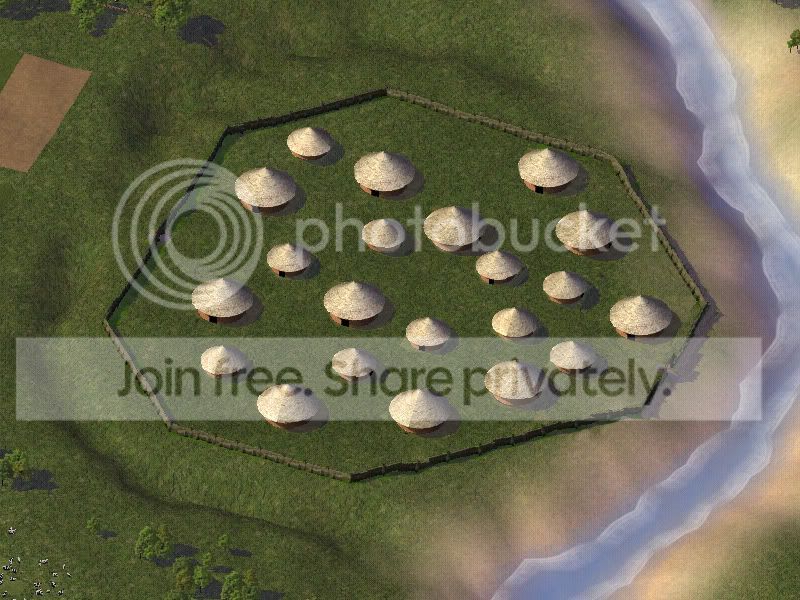
300 BC: The strategic location of Rhyd means that it is constantly attacked by other tribes. The chieftain, Aedan, builds a hill fort on the mouth of the brook south of the village to control and protect the region.

Aerial view of Rhyd and Aedan's fort, 250 BC
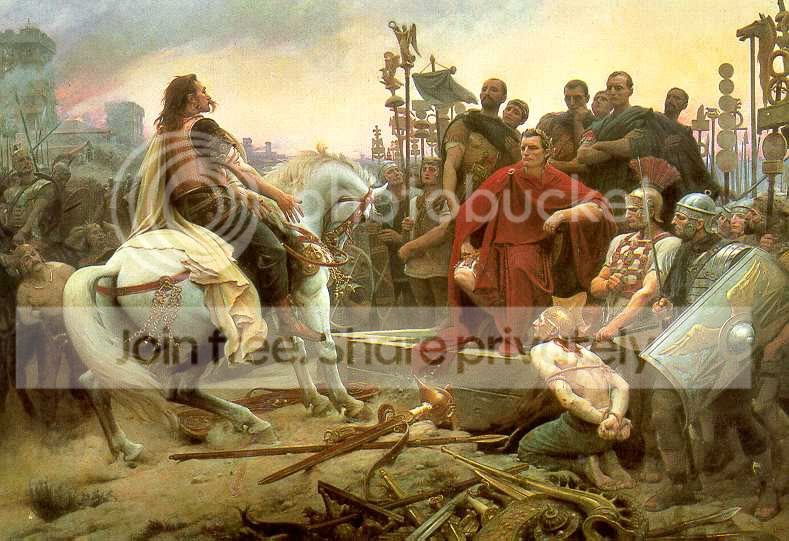
Vercingetorix, chieftain of the Graulish Celts, surrenders to Caesar.
50 BC - 40 AD: As the population in south east Bainart increases dramatically, resources such as land become scarce. Eventually the refugees clash with the native population, upsetting the political stability across southern Bainart.
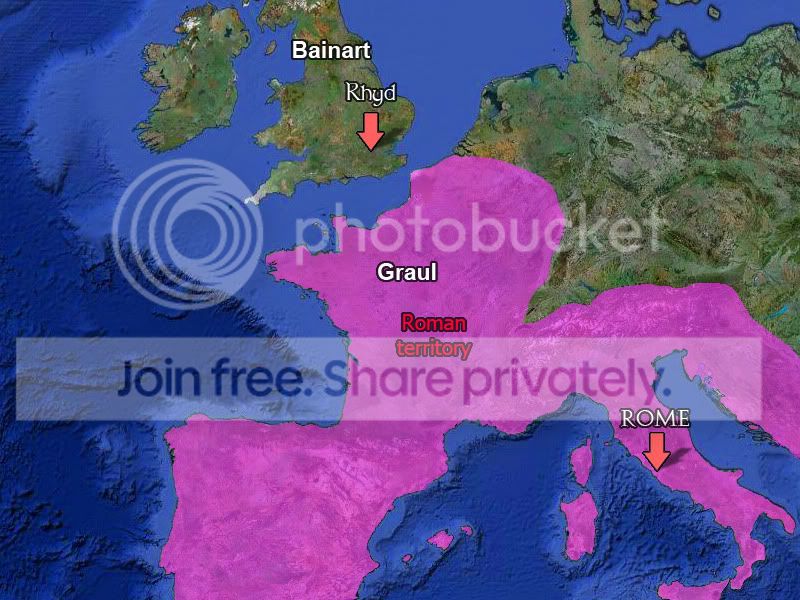
Roman Republic, 1 AD
Acknowledgements
Walls: jeronij
Painting: Vercingetorix throws down his arms at the feet of Julius Caesar, by Lionel Noel Royer, in 1899
Cattle: boon1234
-
 1
1


11 Comments
Recommended Comments
Sign In or register to comment...
To comment in reply, you must be a community member
Sign In
Already have an account? Sign in here.
Sign In NowCreate an Account
Sign up to join our friendly community. It's easy!
Register a New Account