

edaramx
-
Content Count
13 -
Joined
-
Last Visited
1 Follower

About edaramx
-
Rank
Freshman

Recent Profile Visitors





About Me
Below represents my interests relevant to SimCity. In my teens and 20's my main hobbies were architectural drawing and photography, later going to college I studied mainly biology and anthropology.. My love of nature led me to making park service public presentations. Early on, I intended to go to the school of Architecture, and I still identify mostly with the master architects as they combine the natural, the physical engineering arts, and the material presentation into their masterpieces of form, and function. My two favorite architects are Frank LLoyd Wright and Authur Erickson both of whom I've featured below. They each have a depth of connection to both the humanities and the natural environment which serve both purposes of promoting a healthy society and a healthy planet.
---————————/_\————————---
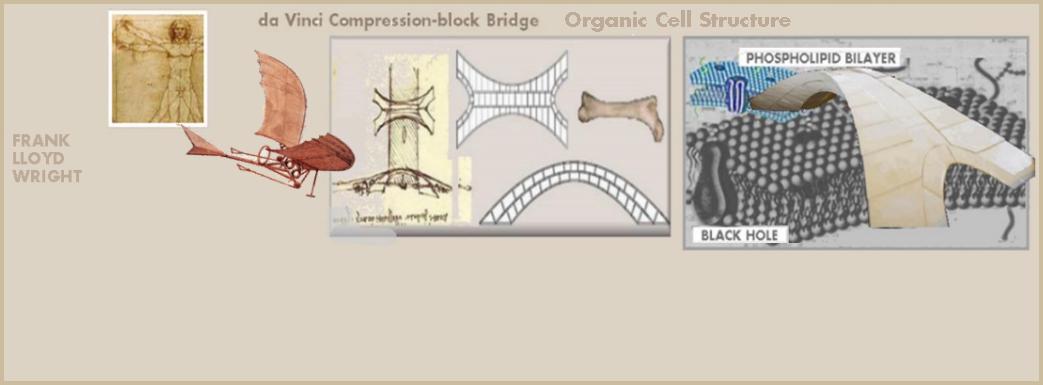
About the Cover Photo
Leonardo da Vinci's bridge design is composed from studies of strengths in tree-trunks and animal femurs. The compression block construction and angular arrangement is found to be a practical architectural engineering masterpiece. The phospholipid bilayer composing cell membranes may prove to associate similarly to the structure of the membrane of the universe full of black holes.
Engineers put Leonardo da Vinci’s bridge design to the test
Proposed bridge would have been the world’s longest at the time; new analysis shows it would have worked.
---————————/_\————————---
Theories of Urban Planning
https://en.wikipedia.org/wiki/Theories_of_urban_planning
- "The Garden city movement was founded by Ebenezer Howard (1850-1928). His ideas were expressed in the book Garden Cities of To-morrow (1898). His influences included Benjamin Walter Richardson, who had published a pamphlet in 1876 calling for low population density, good housing, wide roads, an underground railway and for open space;" —Wikipedia
- "Arturo Soria y Mata's idea of the Linear city (1882) replaced the traditional idea of the city as a center and a periphery with the idea of constructing linear sections of infrastructure - roads, railways, gas, water, etc.- along an optimal line and then attaching the other components of the city along the length of this line. As compared to the concentric diagrams of Ebenezer Howard and other in the same period, Soria's linear city creates the infrastructure for a controlled process of expansion that joins one growing city to the next in a rational way, instead of letting them both sprawl.;" —Wikipedia
- "The City Beautiful movement was inspired by 19th century European capital cities such as Georges-Eugène Haussmann's Paris or the Vienna Ring Road. ... Urban problems such as the 1886 Haymarket affair in Chicago had created a perceived need to reform the morality of the city among some of the elites. (Daniel) Burnham's greatest achievement was the Chicago plan of 1909. His aim was 'to restore to the city a lost visual and aesthetic harmony, thereby creating the physical prerequisite for the emergence of a harmonious social order', essentially creating social reform through new slum clearance and creating public space, which also endeared it the support of the Progressive movement." —Wikipedia
- Decentralized planning: Frank Lloyd Wright (similarly) identified vehicular mobility as a principal planning metric. Car-based suburbs had already been developed in the Country Club District in 1907-1908 (including later the world's first car-based shopping centre of Country Club Plaza), as well as in Beverly Hills in 1914 and Palos Verdes Estates in 1923. Wright began to idealize this vision in his Broad-acre City starting in 1924, with similarities to the garden city and regional planning movements. The fundamental idea was for technology to liberate individuals. In his vision, he described the city as: 'spacious, well-landscaped highways, grade crossings eliminated by a new kind of integrated by-passing or over- or under-passing all traffic in cultivated or living areas … Giant roads, themselves great architecture, pass public service stations . . . passing by farm units, roadside markets, garden schools, dwelling places, each on its acres of individually adorned and cultivated ground.' ... " —Wikipedia
- Modernist planning: Cybernetics and modernism inspired the related theories of rational process and systems approaches to urban planning in the 1960s. ... The systems approach was a reaction to the issues associated with the traditional view of planning. It did not understand the social and economic sides of cities, the complexity and interconnectedness of urban life, as well as lacking in flexibility. The 'quantitative revolution' of the 1960s also created a drive for more scientific and precise thinking, while the rise of ecology made the approach more natural." —Wikipedia
---————————/_\————————---
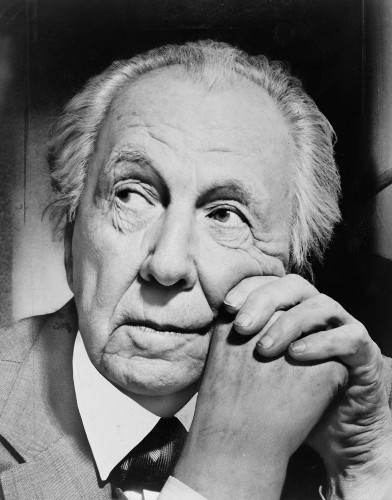
Frank LLoyd Wright (used as profile picture above) quotes:
"Organic architecture seeks superior sense of use and a finer sense of comfort, expressed in organic simplicity."
"The mother art is architecture. Without an architecture of our own, we have no soul of our civilization."
"The measure of a man's culture is the measure of his appreciation. We are ourselves what we appreciate and no more."
I've emphasized the 3rd quote above because I had an insight into what Wright means. In thinking about the qualities of men and women we can consider their physical, social, domestic, moral, intellectual, technical and status attributes, but given the complexity of human beings specialized in communicating vision, experience and cognition, it is what a man or woman sees that determines their compatibility both with nature and each other. The greater the perspective of a person, the greater is their strength as a human being.
---————————/_\————————---
https://omrania.com/insights/eco-city-planning-organic-urbanism/
Nature’s ability to adapt to changing conditions can serve as a model to planners and architects looking to create sustainable environments. The notion of organic urbanism suggests that the development of future cities should be informed by the growth processes, structures, forms, and adaptations found in the natural world. A renewed focus on the workings of ecological systems provides an alternative to the abstract schemes and purely technological solutions that for too long dominated modernist planning. —Hugh Kidman, Chief Design Architect
http://bay.stanford.edu/blog/2016/11/9/should-cities-be-planned-at-all
Planning and organic growth are yin and yang; both contribute to a city’s well-being, supporting and energizing one another. (Here), we consider organic growth to be the social and economic activities of ordinary citizens, while planning consists of activities and developments organized by local officials. —Stanley Gu, Stanford Future Bay (Area) Initiative
Guggenheim art museum by Frank Lloyd Wright —Wikipedia Commons

"The permanent home of a continuously expanding collection of Impressionist, Post-Impressionist, early Modern, and contemporary art and also features special exhibitions throughout the year. ... In 1959, the museum moved from rented space to its current building, a landmark work of 20th-century architecture designed by Frank Lloyd Wright. The cylindrical building, wider at the top than at the bottom, was conceived as a 'temple of the spirit' ... " —Wikipedia
---————————/_\————————---
Arthur Erickson quotes:
"The way of architecture is the quiet voice that underlies it and has guided it from the beginning."
"No phenomenon can be isolated, but has repercussions through every aspect of our lives. We are learning that we are a fundamental part of nature's ecosystems."
"Space has always been the spiritual dimension of architecture. It is not the physical statement of the structure so much as what it contains that moves us."
Academic Quadrangle (1963) by Arthur Erickson —encyclopedia Canada

Erickson turned for inspiration to the acropolis in Athens and the hill towns of Italy, where the mountain was incorporated into the design itself. This concept is evident in many aspects of the university's design. For example, the manner in which the buildings are terraced to remain in harmony with the contours of the landscape and the emphasis upon the horizontal rather than the vertical expansion of the buildings themselves. —Scott Norsworthy
---————————/_\————————---
