



Chapter 4: La Perouse

From the outside, Port Arthur appeared to be a worry-free, idylic, peaceful society - a successful community-based settlement where individuals were treated equally and lived together in harmony. There was no currency, no formal policing, no forced labour - everybody knew each other and trust amongst the group was strong. However, there was always one lingering thought in the back of everyone's mind. One day, surely, their island would be discovered, and when that day arrived, what would that mean for the future of New Southland? The threat of a British attack and raid on the settlement was ever present, and so to protect his people and the future of New Southland, Arthur had ordered the construction of defenses at the mouth of Arthur's Cove, including stone wall fortifications and a watchtower to keep a lookout for any passing ships. Several cannons from the "Charlotte" had also been removed and positioned at the fortifications, pointing out towards the sea.

Watchtower duty was a 24 hour operation, with two 12 hour shifts shared between the sailors and marines. The views from the top of the watchtower were spectacular on a clear day, however the strong southerly winds could easily knock you off your feet if you weren't careful. Pods of whales could be seen almost year-round out across Charlotte's Bay and beyond, using the sheltered bays as breeding grounds and the bountiful waters around the island for feeding. Seals were often seen sheltering on one of the small rocky islands in the bay - which had popularly become known as Seal Rock, and the occasional albatross could be seen flying high above the bay on a clear day. Watchtower duty was a lonely job, and often quite mundane, however essential to the defence and success of Arthur's Cove.


It was early one Sunday morning when Peter Bannerman awoke just before dawn for his morning shift. He made the long trek up to the watchtower at Battery Point to replace his fellow marine George Henderson, who usually took the night shift. George, before joining the navy and setting sail with the First Fleet from England, was well known as a bit of a larakin. Back in his home town of Chessington, he would often be seen spending most of his earnings down at the local pub, where it would not be uncommon to find him asleep at the bar the next morning. The night shifts at the watchtower were very different to the night shifts he was used to. When Peter arrived at the top of the tower, unsurprisingly, he found George asleep at his post. After giving him a good kick in the shins, George jumped up and saluted, yelling out "I was not asleep sir, only resting my eyes!" - thinking it was Arthur. "Get up George, its only me, Peter. See anything last night? Or have you been asleep the whole time..." asked Peter. "Nothing more than the usual - a few pods of whales out in the bay, seals fighting down on the rocks, and look... over there... a flock of sea birds. Nothing to worry about." As Peter looked out across the bay towards the birds, he noticed something strange. They appeared to be circling something. What could it be? A whale carcass perhaps?
As he peered through his telescope, Peter was astounded to see what appeared to be a ship sailing towards them. "George look! Do you see that!" George rubbed his eyes and looked through the telescope - "God almighty its a ship! Quick, ring the bell!" Within minutes, Arthur had raced to the watchtower to see what all the fuss was about. The ship was now in plain sight. It was quite weathered and the sails had been completely ripped apart. A tattered French flag flew from one of the damaged masts, flapping in the brisk ocean breeze. Arthur could see the men aboard waving their arms in the air, seemingly desperate for rescue. As the ship entered Arthur's Cove and approached the shore, Arthur and several of his armed marines took off in a row boat to meet the crew. As he was hoisted aboard, Arthur could see the desperation in the eyes of the crew. They were severely dehydrated, hungry and exhausted. The Captain introduced himself simply as La Perouse, before collapsing on the deck of the ship.

Several months prior, the French expedition led by the esteemed explorer Jean-Francoir La Perouse had been wrecked on the shallow reefs of Vanikoro in the Solomon Islands. Unfortunately for the sailors, the local inhabitants were far from friendly, and many were killed in skirmishes. Some, however, did manage to survive, and had constructed a seaworthy craft out of the wreckage. A group of 75 sailors, including La Perouse, left the island with as many supplies as they could take, in an attempt to reach friendly territory, where they hoped to be rescued. They headed East across the Pacific towards Tahiti, however navigation was difficult and the makeshift craft was ultimately at the mercy of the sea. After sailing for several months, the crew finally spotted land. However, as they drew nearer, it became clear that they had not arrived at the white sandy beaches of tropical Tahiti. Tall pine forests, rocky shores, and a cool mist greeted them as they entered a large open bay. La Perouse spotted smoke rising in the distance, and, desperate for rescue, he managed to navigate the vessel into the well protected cove.
Arthur and his marines quickly returned to shore with La Perouse and ordered more row boats to head out to assist the rest of the crew and bring them back to shore. Once safely on dry land, the French sailors were given much needed food and water and taken into nearby shelters to recover. La Perouse was taken to Arthur's residence to recover, where he shared his story. He asked Arthur when he expected the next ship to arrive at the settlement, so that his crew could return home to France. The response came as quite a shock to La Perouse, who had only a year prior met the British fleet in Botany Bay. He advised Arthur that the British had assumed the "Charlotte" had been lost at sea, and had no plans of searching for the missing crew. Fortunately for Arthur and his mutineers, they had no intentions on returning to Europe and were glad the British, who would surely seek to capture and imprison them if found, were not actively searching for them.

After a few days, the Frenchmen, who had recovered well and were just happy to have survived their ordeal, were put to work assisting the settlers, clearing more land around Arthur's Cove for housing and along Deer Creek for expansion of the farms.

With the excess labour resources available to Arthur, and large amount of felled timber, construction of a small dock and wharf area was ordered where repairs could be undertaken to both the "Charlotte" and the battered French ship. The Frenchmen also assisted in the construction of new roads at Port Arthur, as well as new civic buildings, including a town hall and the first government offices.
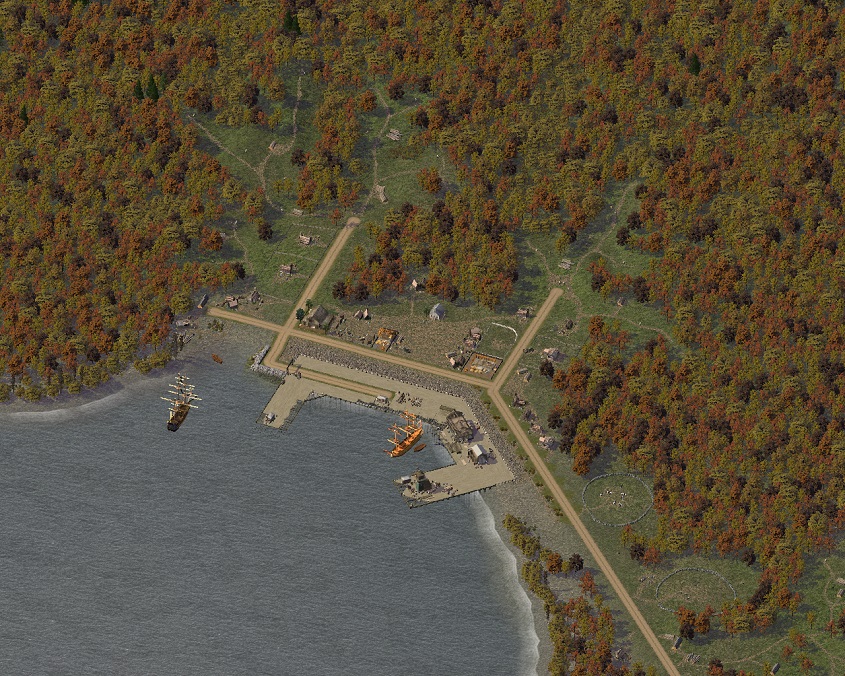
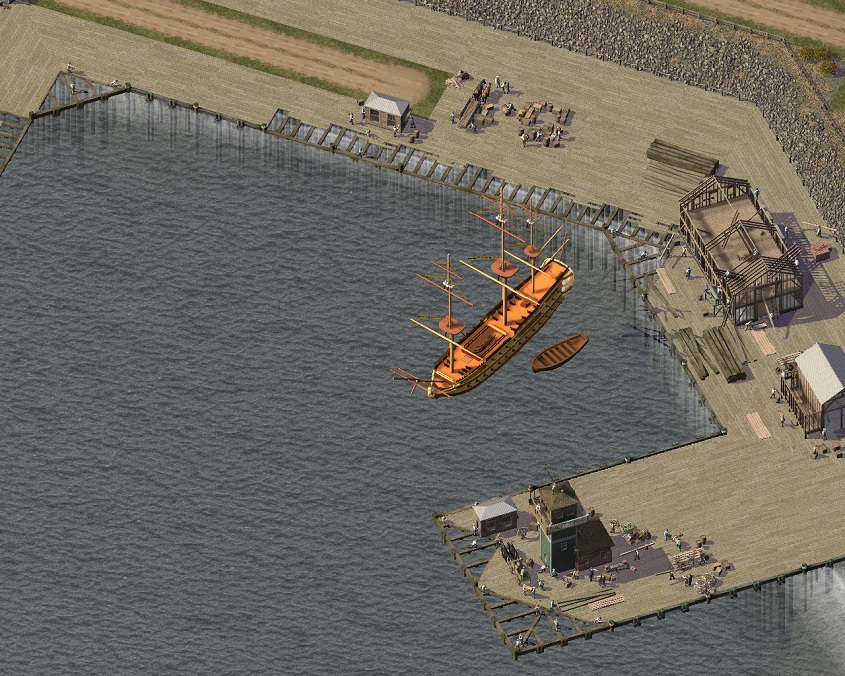
For their contribution to the settlement, Arthur granted the Frenchmen a large parcel of land to the South of Deer Creek, where they enthusiastically begun work clearing land and establishing a small village, which they had named in honour of La Perouse. Several timber cottages, a storehouse, and a wooden church were constructed around a central town square. The surrounding land was cleared for farming and a rough trail snaked it's way back through the forests to the growing Deer Creek farming village of Billings, and on towards Port Arthur.

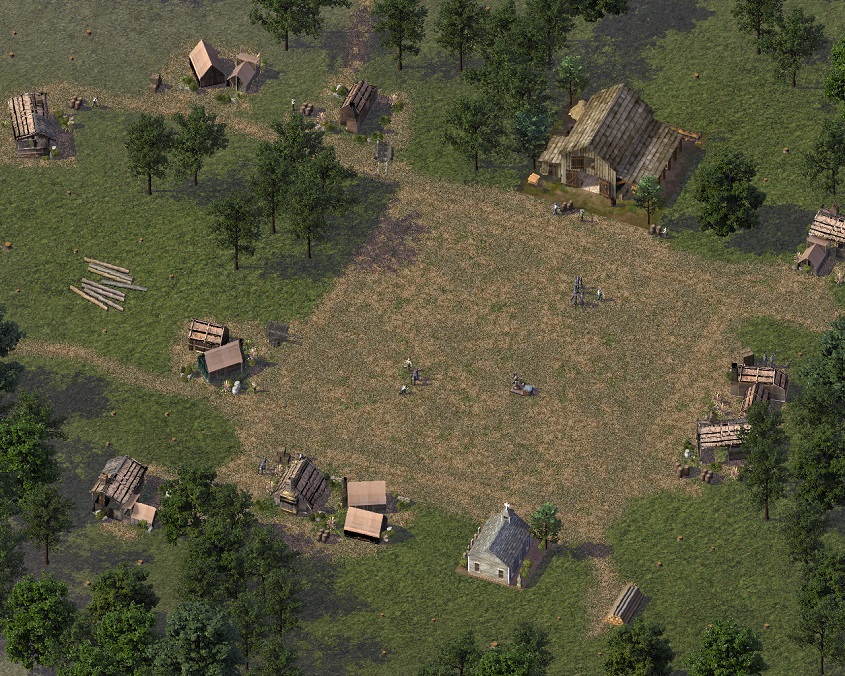
Most settlers were welcoming of the Frenchmen, however some remained skeptical. Would they bring further prosperity to New Southland, or were they more trouble than they were worth. Only time would tell...
-
 13
13


0 Comments
Recommended Comments
There are no comments to display.
Sign In or register to comment...
To comment in reply, you must be a community member
Sign In
Already have an account? Sign in here.
Sign In NowCreate an Account
Sign up to join our friendly community. It's easy!
Register a New Account