



Chapter 7: Lighting the Way - 1812 to 1813

Jan 1812: The town of Hudson called for an extension of the railway from Windsor to assist in exporting its farming produce and link its new industrial area to the growing port at Portsmouth. Governor Westward, who had handed over complete control of Westward Enterprises to his wife Felicity Westward, to avoid any conflict of interest in his new role as Governor, considered the costs of government funding the extension. The cost analysis proved the extension would not be viable at this point in time, due to the much lower demand for the extension, as well as cost in constructing a new bridge over the Windsor Creek. Governor Westward did, however, agree to fund the extension 50/50 with Westward Enterprises, with the new railway to be used by both freight and passenger services to maximise its use. The deal was signed and work commenced on the extension of the railway, with completion expected within 12 months.
May 1812: More settlers hear of the new township of Wellington Bay, and, looking for larger plots of land, they make their way down South along the coast. A new road is built between Gardener's Bay and Wellington Bay, and a ferry terminal is constructed linking Wellington Bay to the greater network.

Aug 1812: The small community on Edward Island was looking for ways to attract more settlers. Natural growth was slow, so Peter Edwards proposed opening up the Eastern portion of the island for farming. New farms were established and sold off to settlers from the mainland. A few small settlements were built along the coast of the island, connected by the new coastal road. The centre of the island, however, remained difficult territory to pass, so was left untouched.

Jan 1813: The new railway linking Windsor to Hudson was opened by Governor Westward. Three new passenger stations were opened (one at Hudson, one at Windsor, and one at Kewel), and a freight station at the new Hudson industrial area to the South of the town.


Mar 1813: As the colony continued to grow, shipping routes to and from the ports became busier. Several ships had been shipwrecked over the last few years, which had cost the Colony greatly in terms of vital supplies and shipments. Governor Westward decided that a lighthouse should be constructed at the Northern entrance to Victoria Bay to guide the ships safely through the waterways. Point Victoria was chosen as the lighthouse location, and work commenced on the giant stone structure. Construction was expected to be completed within 2 years.

Jul 1813: The small township of Sutton Bay (settled illegally just to the North of Windsor) continued to slowly grow with new arrivals from the larger towns in the region. However, as word spread of the settlement, Governor Westward requested the residents start paying taxes to the Colony. The locals refused and the standoff between the Governor and the residents became heated. The Governor sent in a brigade of soldiers to suppress the outlaws, however they fought back valiantly. Eventually, a stalemate emerged, and Governor Westward sat down at the table with the locals to discuss a way forward. The residents, who were keen to maintain their laid-back way of life, agreed to formally join the Colony and pay taxes with one condition - that gambling be allowed to continue in Sutton Bay, as this was strictly prohibited in the Charter of Windsor. The Governor agreed, and the legalisation of gambling for Sutton Bay was written into the Charter of Windsor as the first amendment.
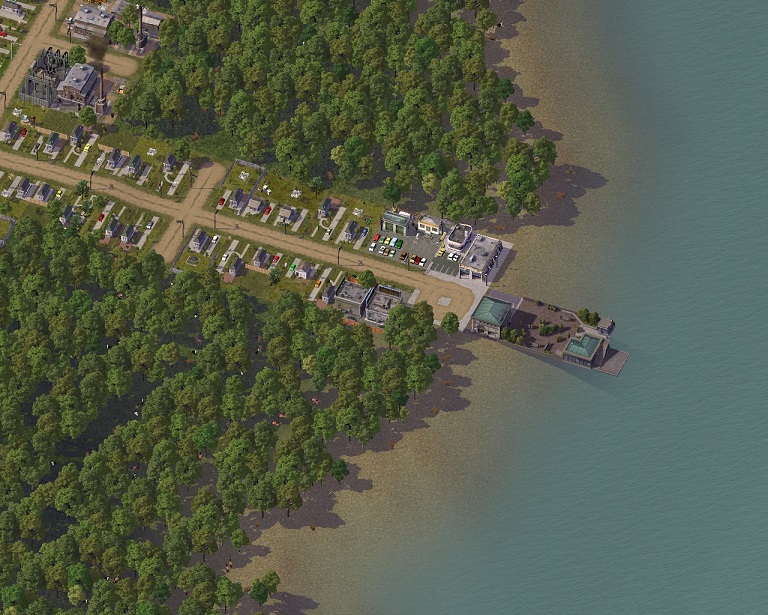
Nov 1813: The original wooden docks at Sutton Bay were upgraded to a larger dock, mostly funded through the newly legalised gambling profits, and a new ferry service was opened up, allowing easier travel to the other towns in the region. A permanent road had yet to be built to Sutton Bay, however the ferries seemed to provide sufficient transport for now.

-
 2
2


0 Comments
Recommended Comments
There are no comments to display.
Sign In or register to comment...
To comment in reply, you must be a community member
Sign In
Already have an account? Sign in here.
Sign In NowCreate an Account
Sign up to join our friendly community. It's easy!
Register a New Account