



Entry One: A rough start

"Every day is a crossroads."

"Friday APRIL 4TH 1952 - BRISBANE: STOCKS have suffered their fifth straight day of losses as concerns mount about a run on the banks. It comes after disastrous nationwide employment statistics, which showed four million workers have now lost work since the recession began. MPs met late last night to discuss potential stimulus measures after leading bank CNBA warned withdrawals had hit 20-year highs." - NATIONAL NEWSWIRE
Was this the end of the mayor's journey? Had his big move been all in vain? Indeed, the economy had been in much better shape back before millions were spent widening Normanhurst's main road, building a new city centre and rail terminus. It had a very different city just mere months ago, the mayor thought. His mind turned back to that fateful journey...
TWO YEARS PRIOR, and lush vast wilderness rushed past the mayor's second class carriage window. The steam train was in a hurry as it wound through the mountains. It was making up for lost time after a longer-than-anticipated stop at Cathedral City. The mayor heard it had something to do with the unions.
Here we go, only something like 20 minutes until I arrive at my new home, he thought, looking out the window.
The train was navigating along excellent track, steaming with purpose now as it closed in on Normanhurst. The locomotive was only a twice-daily service, and one had to request it stop at Normanhurst, so small was the town. The conductor had given a look of confusion when the mayor asked that a halt be made at the town.
Finally, the whine of the brakes and the slowing of the huff-huff signalled that the train was arriving. As the mayor walked out of the small station, what greeted him was a tiny town, not more than five blocks of homes. And then some farms lay to the east and west.

Even then, Hawaii Road - the town's main street leading off the local highway, on which the the town's two shops were found - had been a problem. Rammed with cars and trucks, bumper to bumper. The traffic surprised the mayor, for he reckoned there could be only a couple thousand people in this township. Even if one included the far-flung farming villages, the number of cars was surprising.
The mayor never got to the bottom of why Hawaii had become a traffic sewer, but it was his first edict as mayor to widen it. Even four lanes wouldn't do; three in each direction it was.
After years leading a big city, where money flowed without end, the mayor wasn't probably aware of the cost. But the Feds were willing to fund it anyway - no politician wanted to roadblock the mayor's first project. After all, a journalist from Toombul had even been dispatched to the budding town to follow the mayor's first few months in office. She would report back to residents of his former city his every command, success and failure. Unwittingly, the reporter had become the first of her profession to visit the town (there was no local paper at that time).
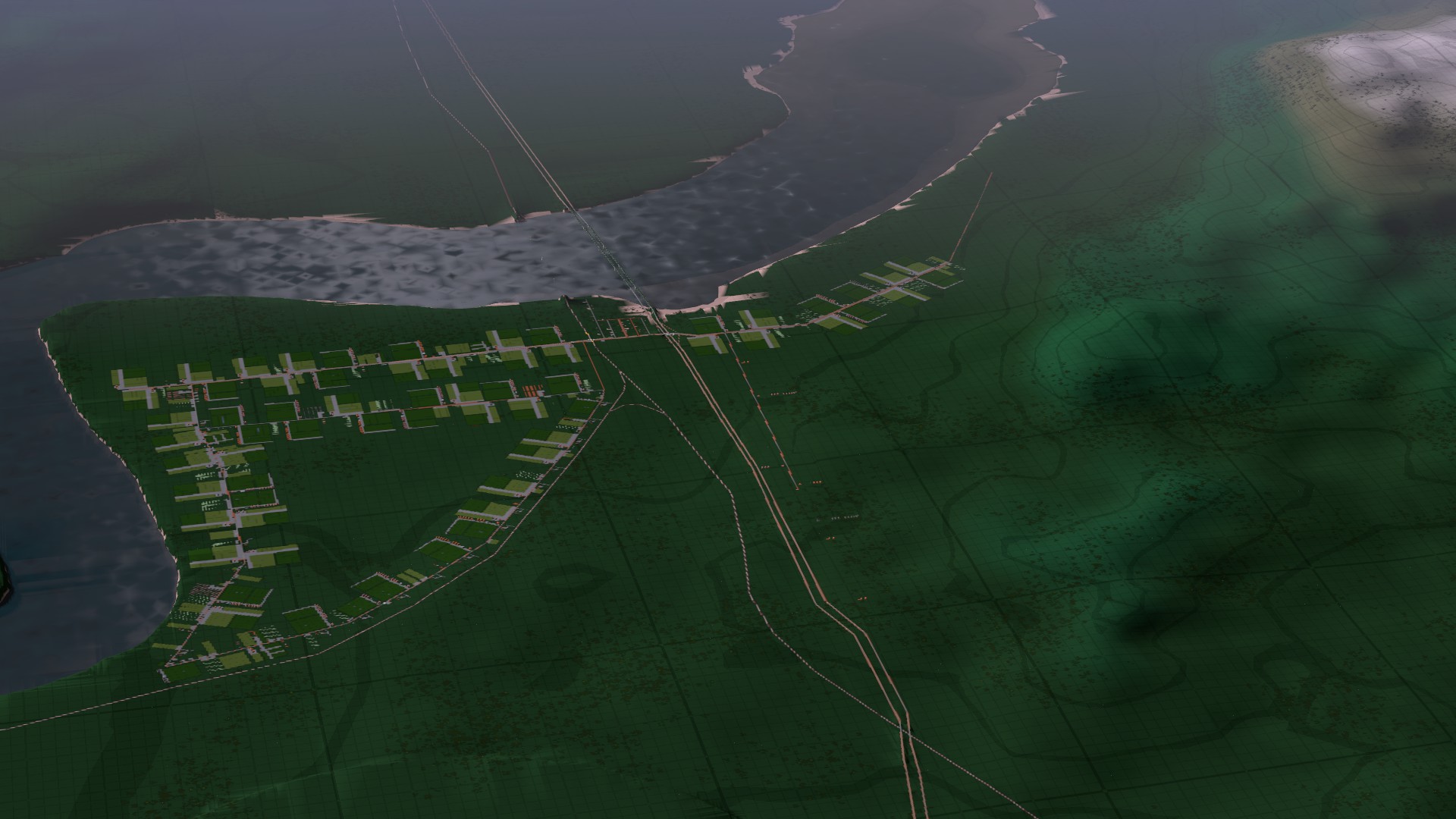
Months passed, and as stories flowed back to Toombul, a theme of the young journalist's scribes was that remarkably little was changing.
She however wasn't privy to the internal planning within Normanhurst's new planning department. The mayor had won millions of dollars in Capitol funding to house an additional 20,000 people by 1952.
"The amount should be firstly spent towards a new rail terminal, central business district and housing for the township," read the Federal Government's statement. "A new settlement, north of the river, should then be of upmost consideration."
So the mayor set planners to carve up land to the town's north-west corner. Property taxes were dropped to zero and within two years, spurred by the promise of good-paying jobs, 20,000 people had indeed made Normanhurst home. To the mayor, the most remarkable thing was the pace of growth. Two pictures, taken just a month apart, showed how quickly the new central business district had been laid:


Now armed with a six-platform rail terminus, trains were now running 20-minutely through Normanhurst, between Cathedral in the south and several townships in the north. A direct service from the west, from Brisbane via Vernon, became the first service to regularly service the new platforms, dubbed Normanhurst Central. The old station, located in the town's east, was now branded 'Old Town.'
But then that fateful newspaper dropped on the mayor's doorstep. "RECESSION HITS," the headline blared. Now blocks of the new CBD, which developers had been circling like vultures, were going to sit undeveloped. Metrics from the planning department showed demand for all development - residential, mixed, commercial, office, industry and even farming - had fallen to nought.
1952 had started with vigour, but by April the mayor was desperate to know whether the expensive project of building an entirely new city had been abandoned by a now-contracting economy.
Two years after it all began, the mayor found himself on the train heading away from Normanhurst. His destination: the Capitol.
-
 1
1
-
 1
1


0 Comments
Recommended Comments
There are no comments to display.
Sign In or register to comment...
To comment in reply, you must be a community member
Sign In
Already have an account? Sign in here.
Sign In NowCreate an Account
Sign up to join our friendly community. It's easy!
Register a New Account